|
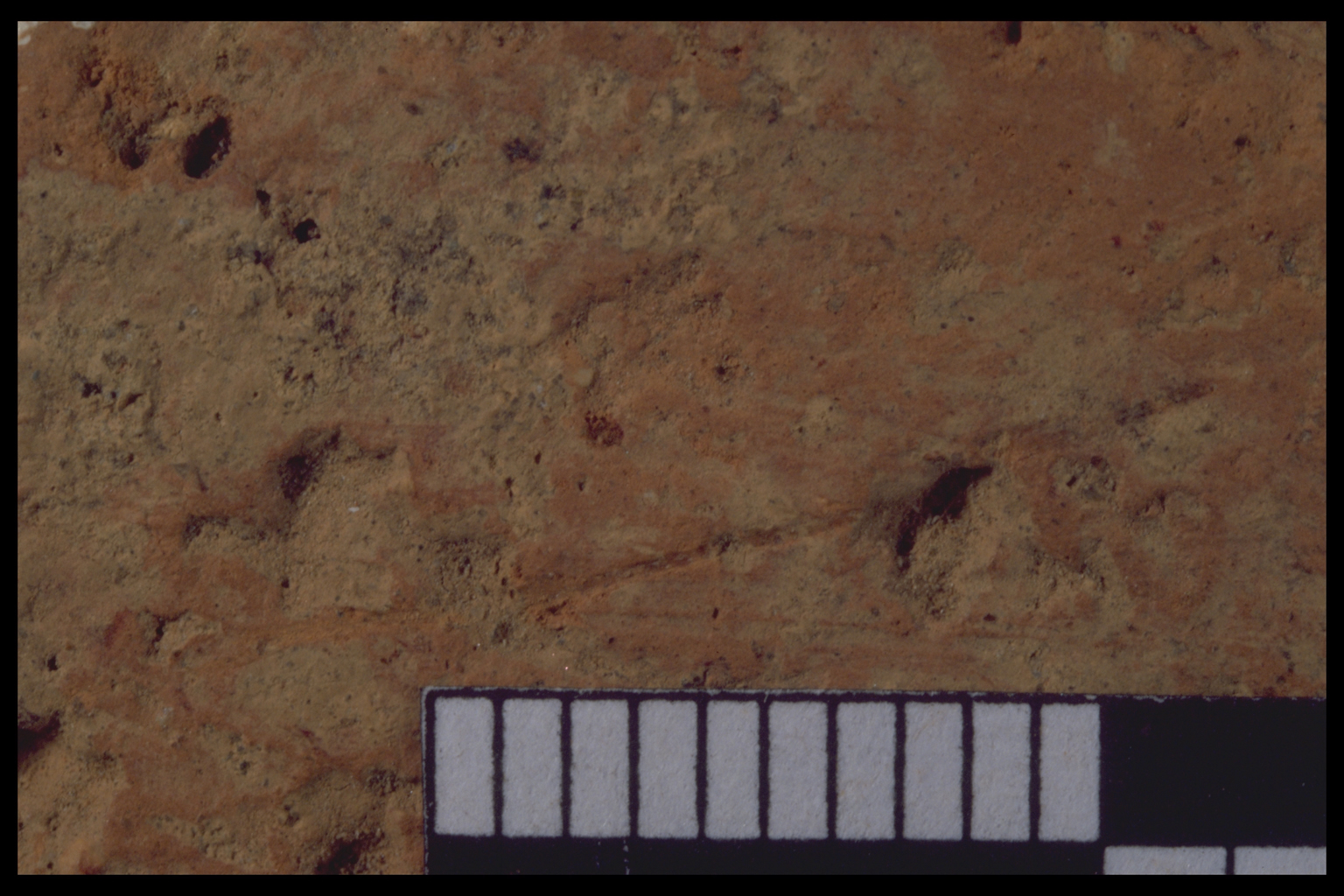
14. Red Brown Calcareous Ware
|
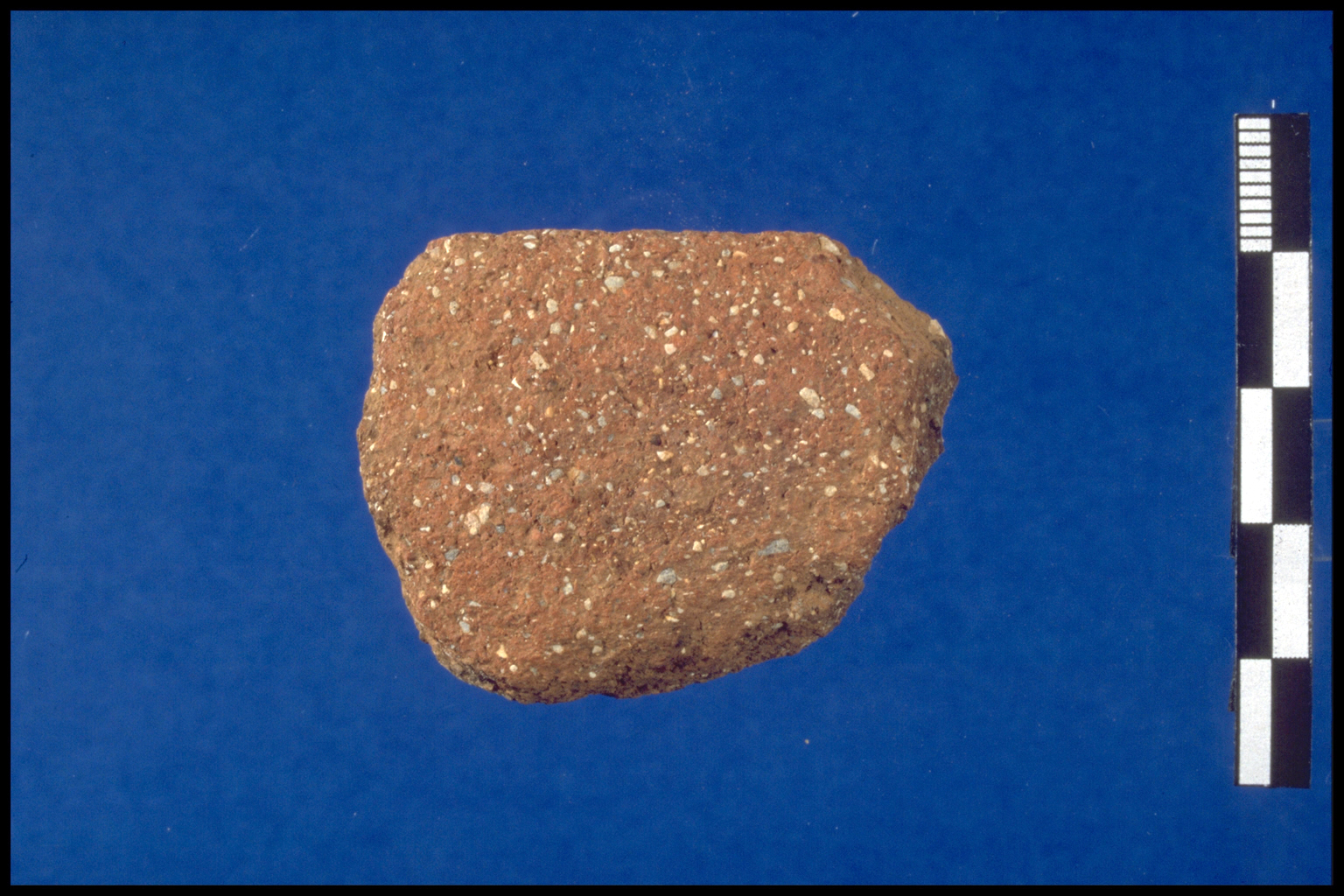
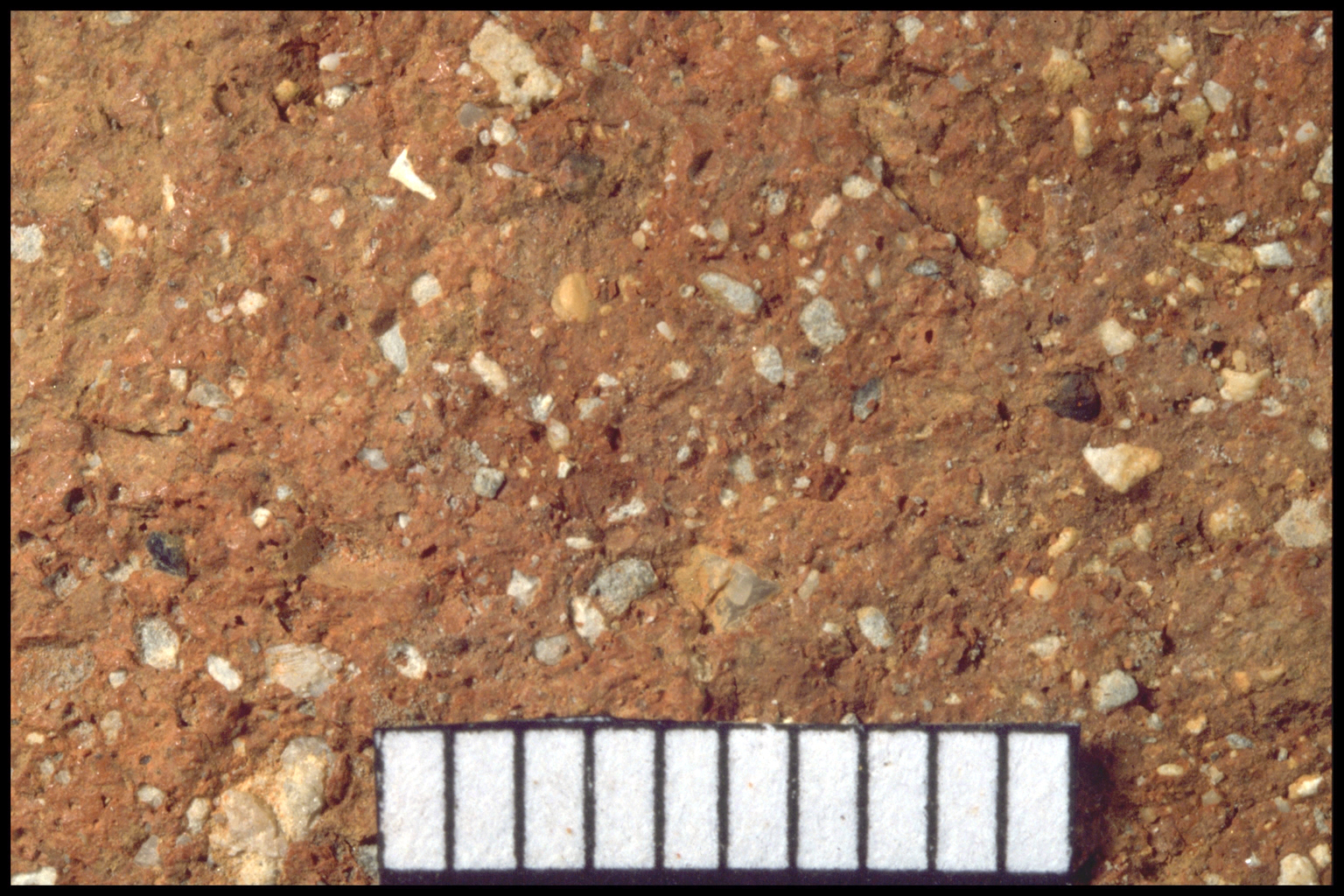
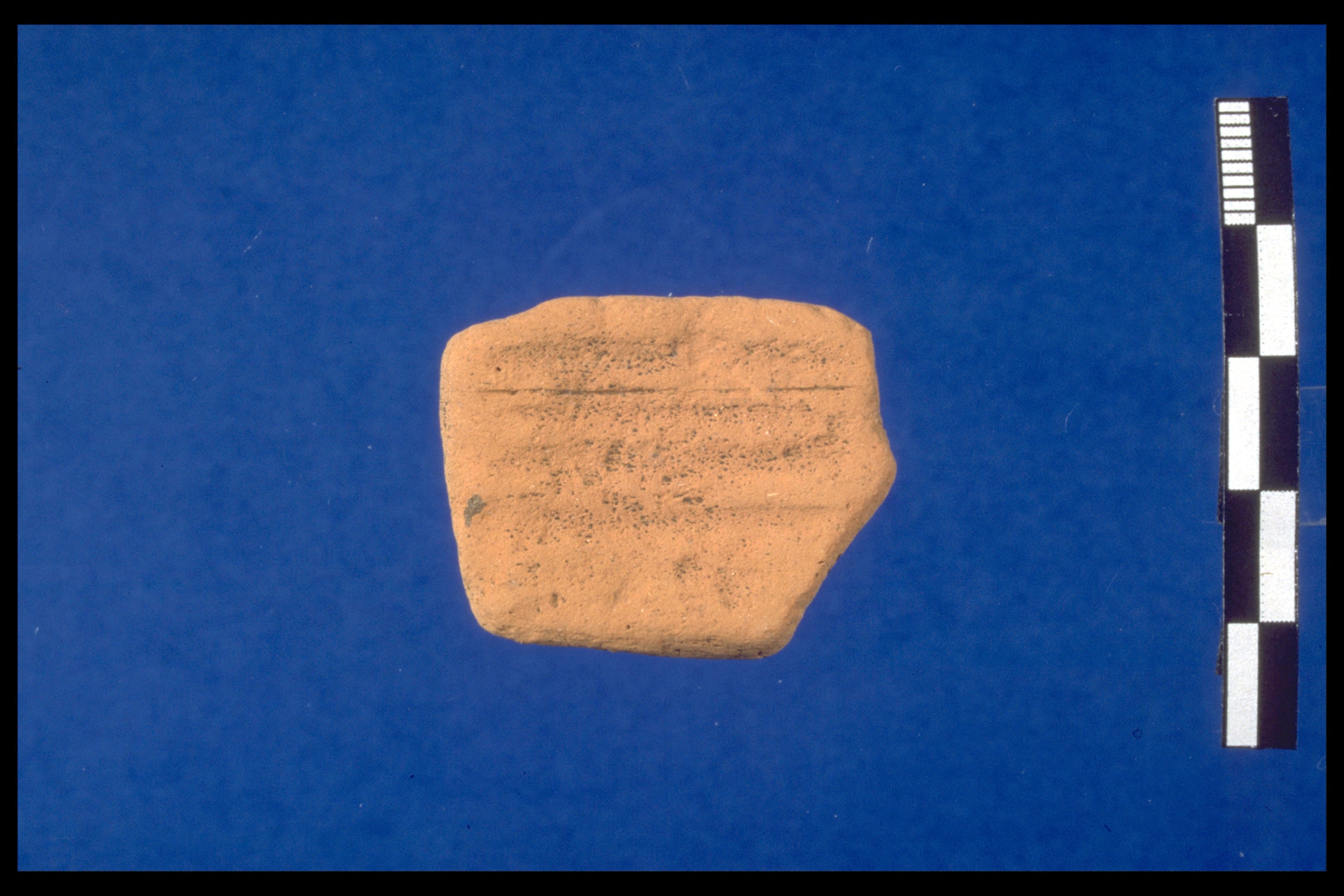
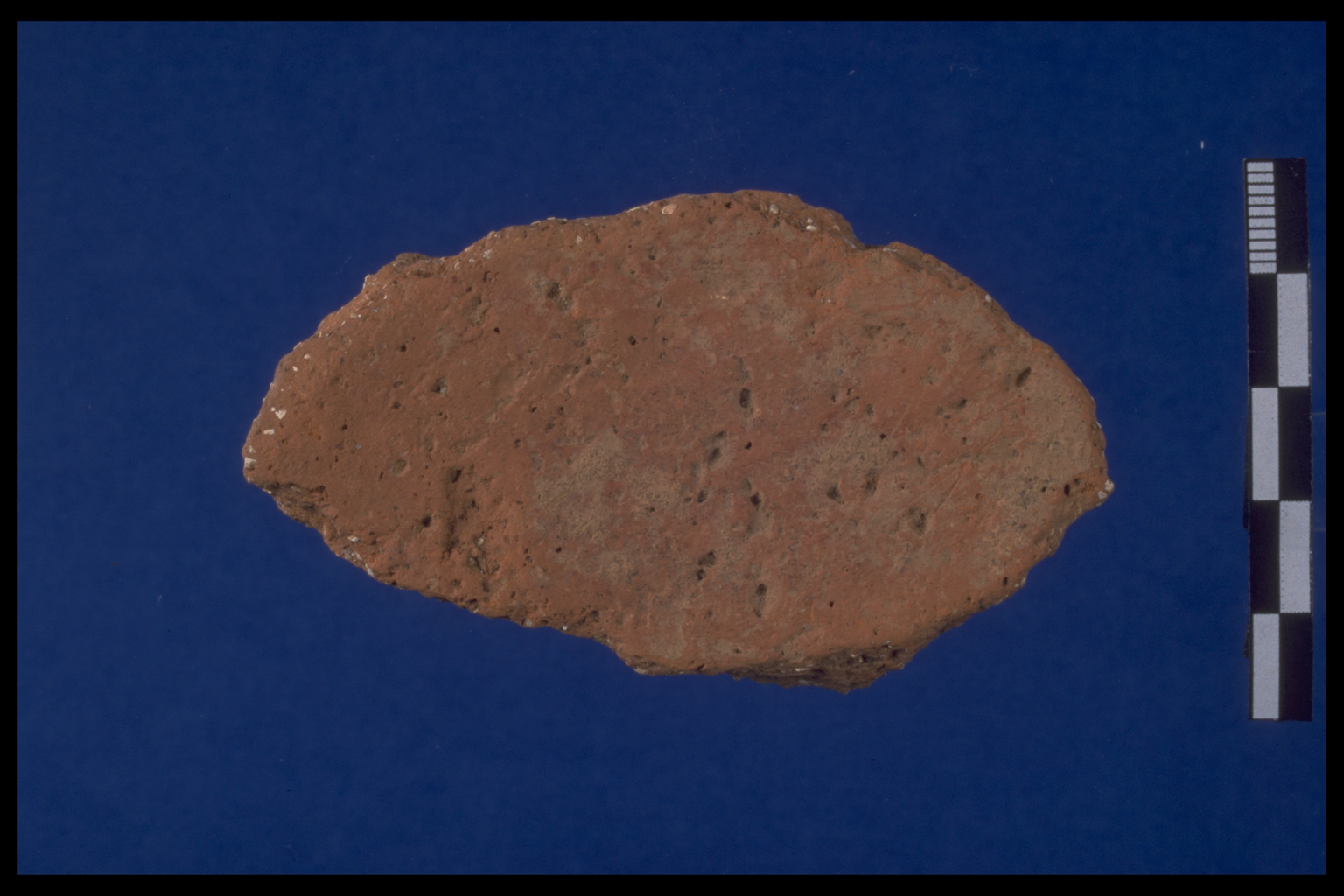
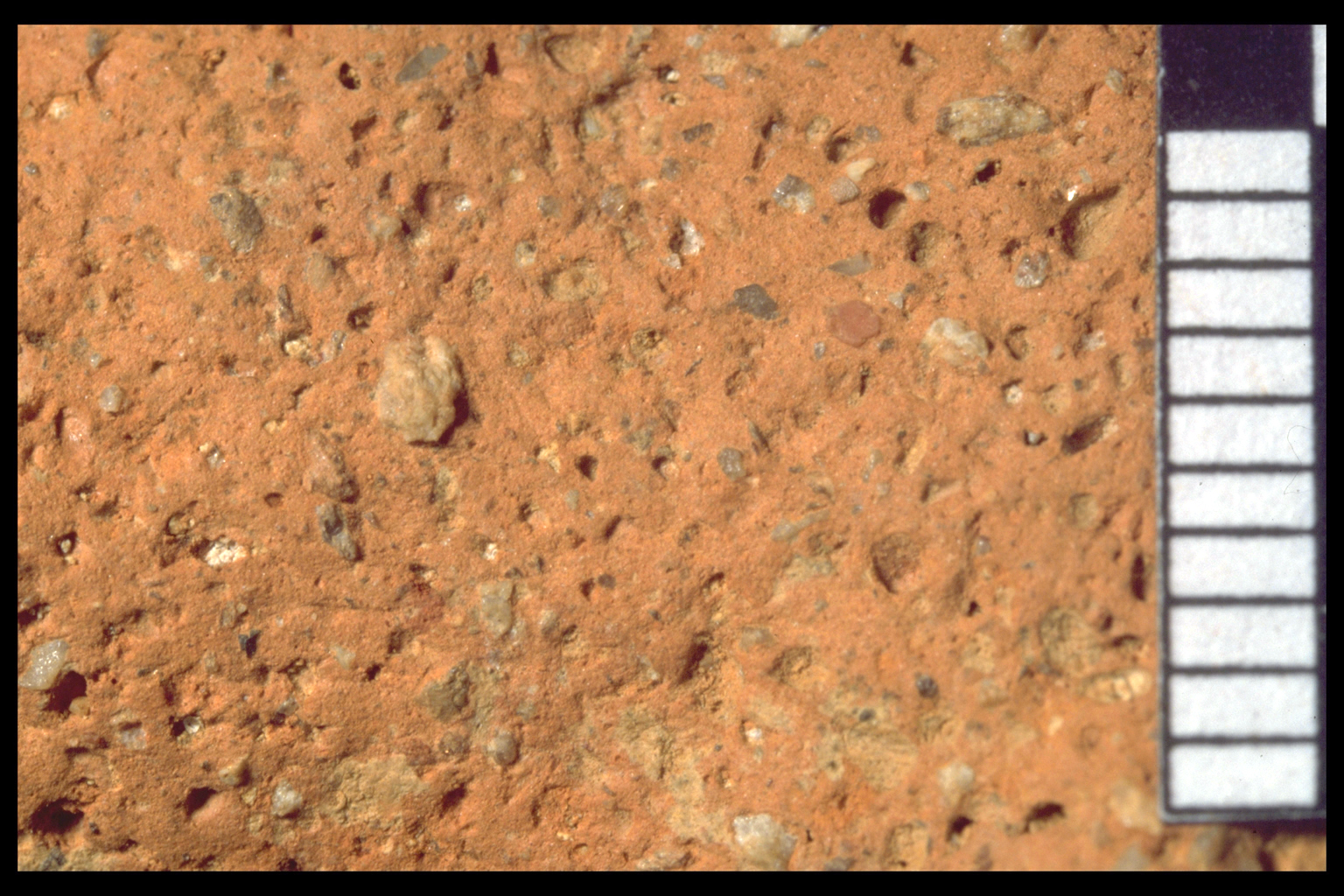
Red Brown Calcareous Ware is characterized by red brown surfaces
and brown cores. The dominant inclusion is subangular bits of a
calcereous inclusion which varies in size from microscopic to 0.5mm.
Densities of sherds in this fabric vary from 25-40%. In addition
to calcareous, small amounts of phyllite, felspar, claystone, quartz,
ferrous and mica may be present. Surfaces are frequently burnished.
|
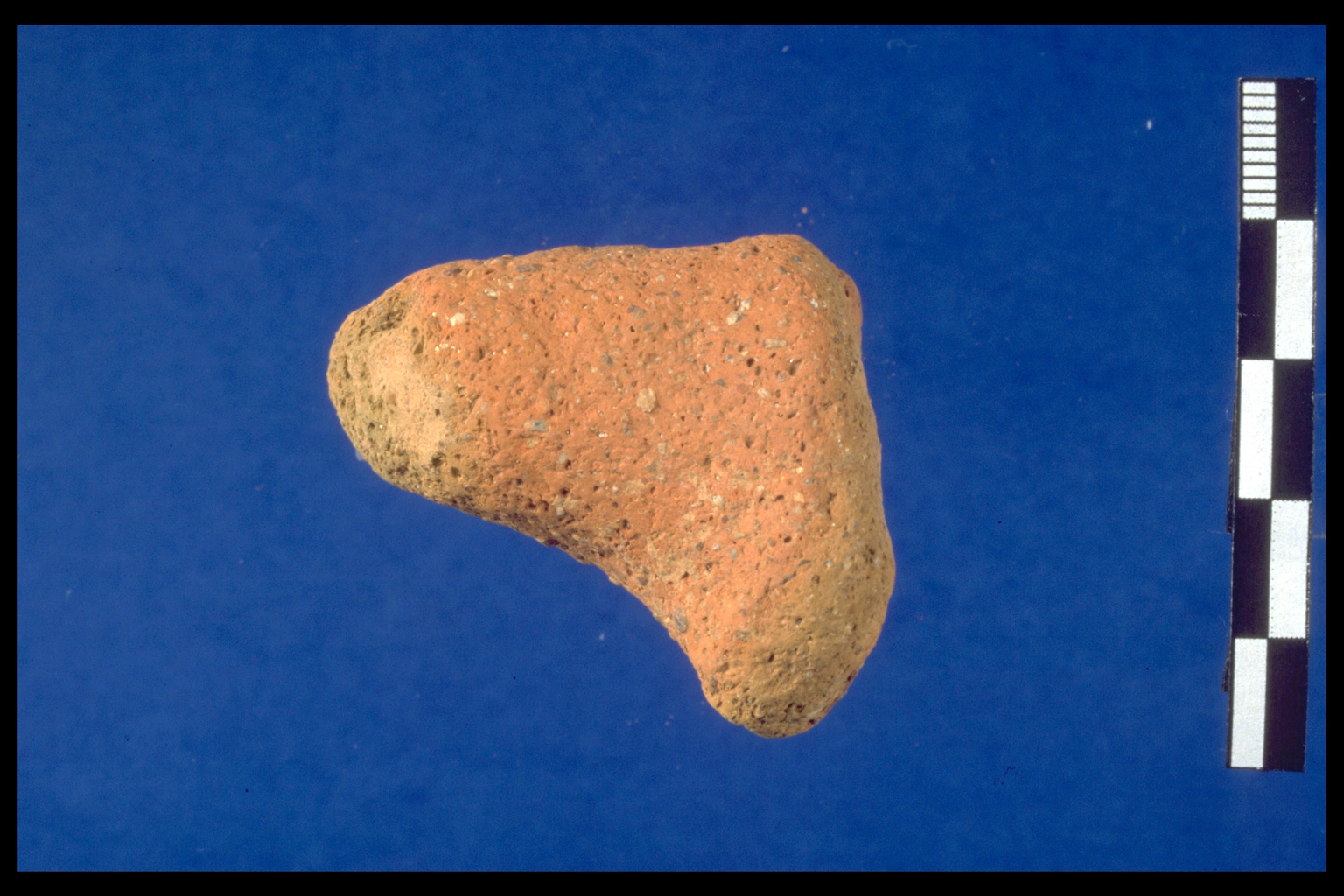
This is a cooking ware fabric, and shapes include small round handles,
flat bases, and tripod feet with flat oval sections.
|
The shapes indicate that this ware must continue as late as Middle
Minoan II (as it does in Khania Area Survey Project), but its association
with Hearth Ware suggests that it may start as early as Final Neolithic.
Its main period seems to be Early Minoan.
|
Sphakia Regions 1(1), 2(3), 3(6), 4(9), 5(4), 6(4) and 8(9). It
is found in all regions except for Region 7.
It is also found in the Khania Area Survey Project and Ag. Vasilios
Valley Survey Project areas, where it seems to be contemporary with
Sphakia.
It also occurs in Vrokastro Survey Project, where it seems to be
largely Early Minoan in date.
|
|
15. Orangey Calcareous Ware
|
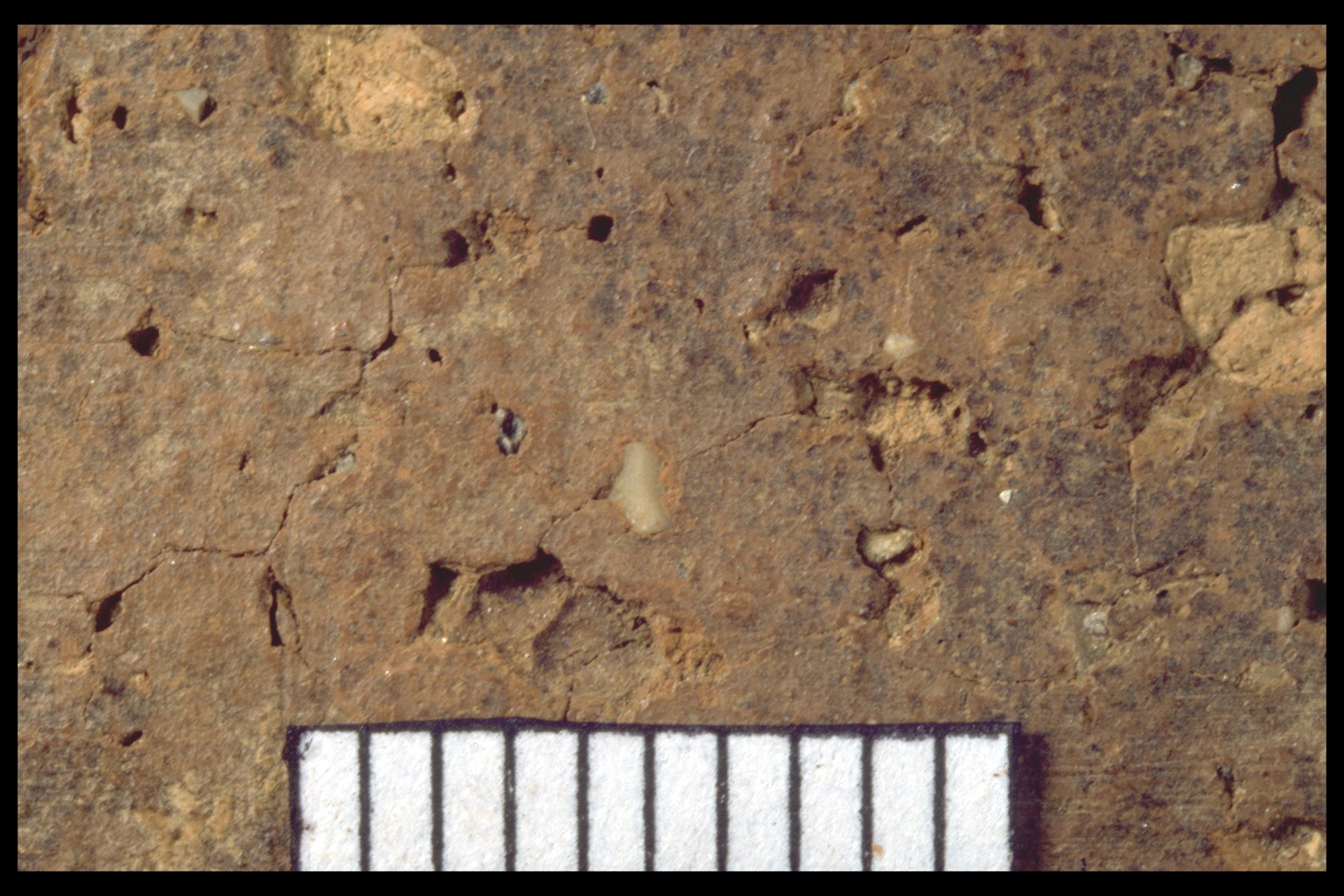
This fabric is characterized by orange surfaces and grey or brown
cores with calcareous and small amounts of other mixed inclusions.
The calcareous can appear as microfossils suggesting aeolianite
as a possible source. While the calcareous dominates, other inclusions
present may include quartz, quartz phyllite, silver mica, phyllite,
soft red siltstone, chert, or magnetite in a density of about 25%.
Maximum inclusion sizes are usually 2mm.
|
This Calcareous fabric is a jar ware. Its shapes suggest medium
sized bowls, jugs or jars.
|
This fabric is hard to date, but it is clearly associated with
other Middle Minoan I-II shapes at Birmani (7.12).
None of the sites it is associated with suggest that it is later
than Middle Minoan II nor earlier that Early Minoan II
|
Sphakia Regions 2(1), 7(14), 8 (5). It is distributed primarily
in eastern Sphakia. The strongly skewed topographic distribution
of this ware suggests that it is local to Region 7.
It is a common Middle Minoan I-II fabric in Khania and Khania Area
Survey Project. And known in Vrokastro Survey Project and Ag. Vasilios
Valley Survey Project.
|