Fabric Research and Analysis
|
In archaeology, pottery dates are usually based on groups of complete
vessels or pieces (sherds), found together in sealed, stratified
deposits on an excavation. Fine pottery, used for eating and drinking,
changes most frequently; coarse pottery, used for cooking, storage,
transport, and industrial production, changes at a much slower rate.
Fine pottery, precisely because it changes more often, forms the
basis of most pottery chronologies, and is, conventionally, studied
in more detail. Coarse pottery does not usually receive as much
attention from archaeologists.
|
|
Fortunately, things are changing: archaeologists have realised
the value of studying both fine and coarse wares, and they have
begun to apply fabric analysis to both. In the future, when researchers
publish well-dated excavation deposits, their reports will almost
certainly include detailed comments on fabric, as well as on shape
and style. Such reports will make it possible for all archaeologists
to make very detailed, and hopefully accurate, comparisons between
different groups of pottery from both excavation and survey.
In the course of Sphakia Survey fieldwork, we collected pottery
from three epochs: Prehistoric; Graeco-Roman; and Byzantine-Venetian-Turkish.
To date (08.00) there has been very little excavation in Sphakia,
and most of the material excavated is later than Prehistoric. For
the latter two epochs, we have enough fine ware pottery, known and
published from other sites and areas, to be able to date most of
our material. But for the Prehistoric epoch, we have almost no fine
ware: nearly all the Prehistoric sherds are coarse.
We therefore had to find a way to date the (mostly coarse) Prehistoric
pottery, and also the unassigned coarse wares belonging to the Graeco-Roman
and Byzantine-Venetian-Turkish epochs. Fabric analysis, applied
to both coarse and fine wares, has provided an analytical tool for
placing our material in a testable chronological sequence, covering
all three epochs.
|
|
On the web site we provide the following:
- a brief outline of the stages of fabric
analysis used by the Sphakia Survey;
|
BRIEF OUTLINE OF SPHAKIA SURVEY FABRIC ANALYSIS
I. Direct Investigation of Sphakia Survey Pottery
Jennifer Moody developed a form of fabric analysis during her work in
the Khania Archaeological Survey Project (Moody 1985, 1987). Since then
she has adapted it for use on other projects, such as the Sphakia Survey.
Other archaeologists employ a system similar to Moody's; see for example
the work of Haggis and Mook (1993) for their survey in the Kavousi area,
also on Crete. Many people have now contributed to fabric analysis done
for the Sphakia Survey, such as Pamela Armstrong who is undertaking a
scientific study of Byzantine fabrics (Armstrong and Hatcher 1998). We
have also benefited from a handbook on Roman pottery fabrics (Tomber and
Dore 1998).
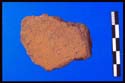
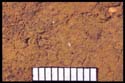 The
initial stages of fabric analysis are basically a form of geology, on
a very small scale. Sherds from many sites are analysed, using a handlens
(macroscopic examination). The sherd's condition, shape, size, texture,
manufacture, colour, hardness, and inclusions are recorded on a special
form. The catalogue form shows the complete list of information; take
a look at the
record for a Prehistoric sherd from Troulos (4.44). Petrography --
the microscopic examination of thin sections, in this case of pottery
-- can be used to confirm the identification of inclusions; you can also
look at the petrographic
record for the same sherd. The
initial stages of fabric analysis are basically a form of geology, on
a very small scale. Sherds from many sites are analysed, using a handlens
(macroscopic examination). The sherd's condition, shape, size, texture,
manufacture, colour, hardness, and inclusions are recorded on a special
form. The catalogue form shows the complete list of information; take
a look at the
record for a Prehistoric sherd from Troulos (4.44). Petrography --
the microscopic examination of thin sections, in this case of pottery
-- can be used to confirm the identification of inclusions; you can also
look at the petrographic
record for the same sherd.
Eventually it is possible to group sherds in terms of larger fabric
families, which include smaller fabric groups, as shown on the list of
fabrics. The distribution of fabric groups
and fabric families can be shown on a distribution map. For example, the
list states that Fabric Group No. 6, Silver-Spotted
Blue Ware, belonging to the Siltstone-Claystone Fabric Family, occurs
only in eastern Sphakia. It is used in the Late Minoan III - Early Iron
Age, though some pieces may be Middle Minoan. This fabric is also known
from the site of Monastiraki, and from sites in the Ag. Vasilios Valley,
both just to the E of Sphakia, as well as from even farther E (Vrokastro
and Malia). The pattern of distribution of this fabric group suggest further
questions: are the fabrics from the two areas, Sphakia/Ag. Vasilios and
Vrokastro/Malia, identical or not? In either case, what further work could
help to locate the place or places where the actual pottery was made?
 Fabric
Group No. 7, Hamburger, belonging to the Mixed Metamorphic Family,
also occurs in eastern Sphakia, but seems not to be known outside the
eparchy. It is used for Minoan tripod cooking pots and other large vessels
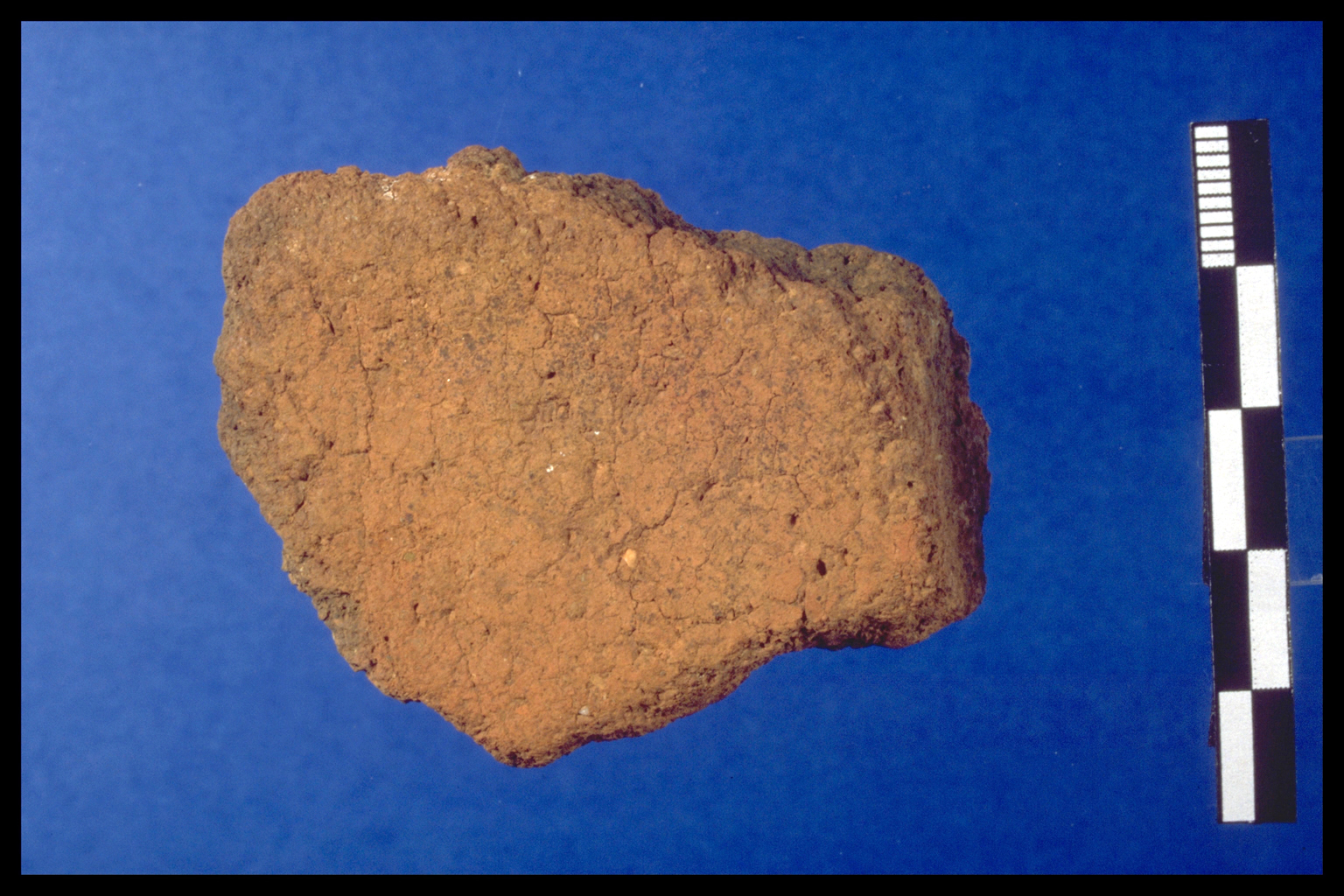
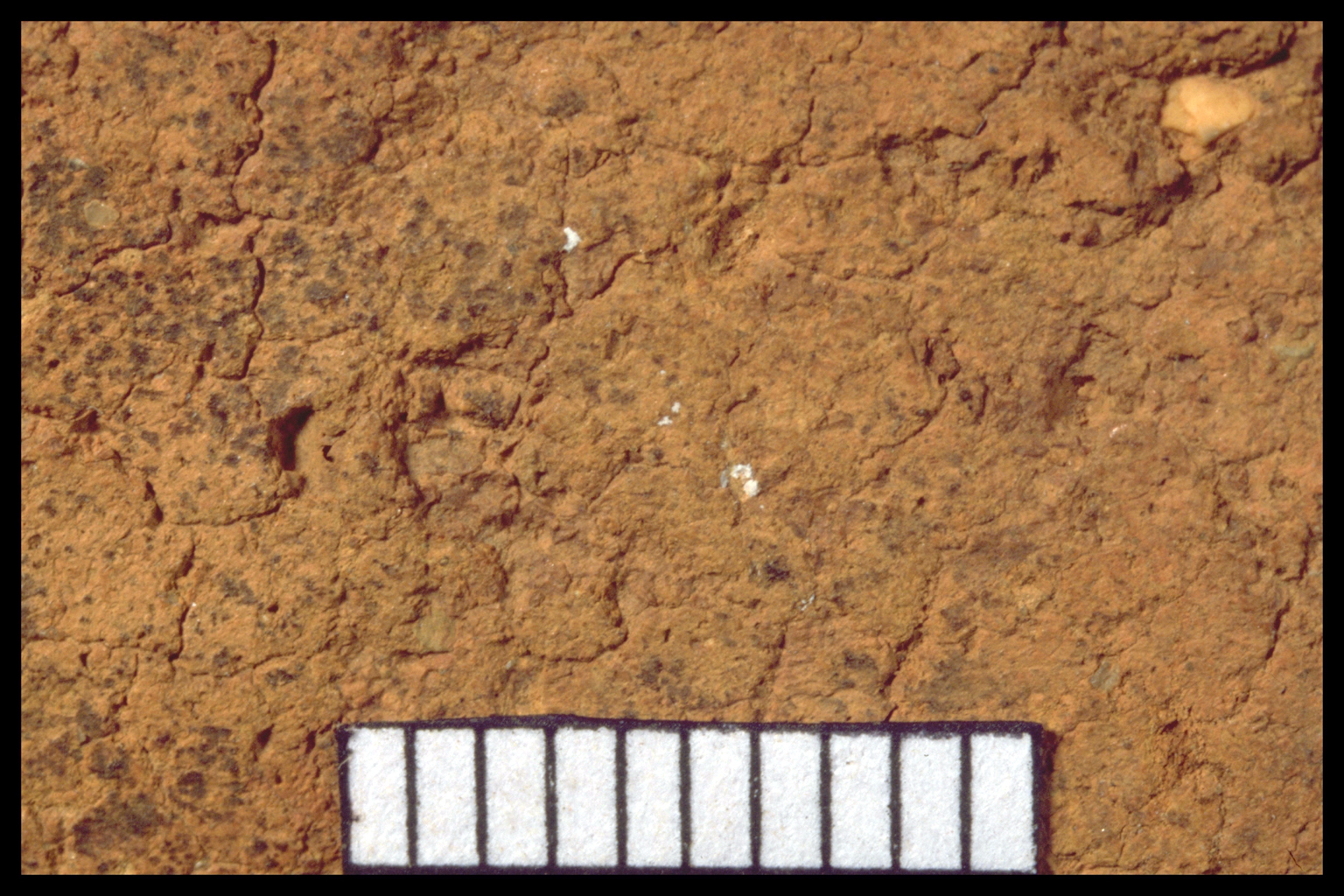
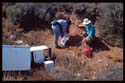
such as pithoi. Many sherds in this fabric come from Region 8. True clay
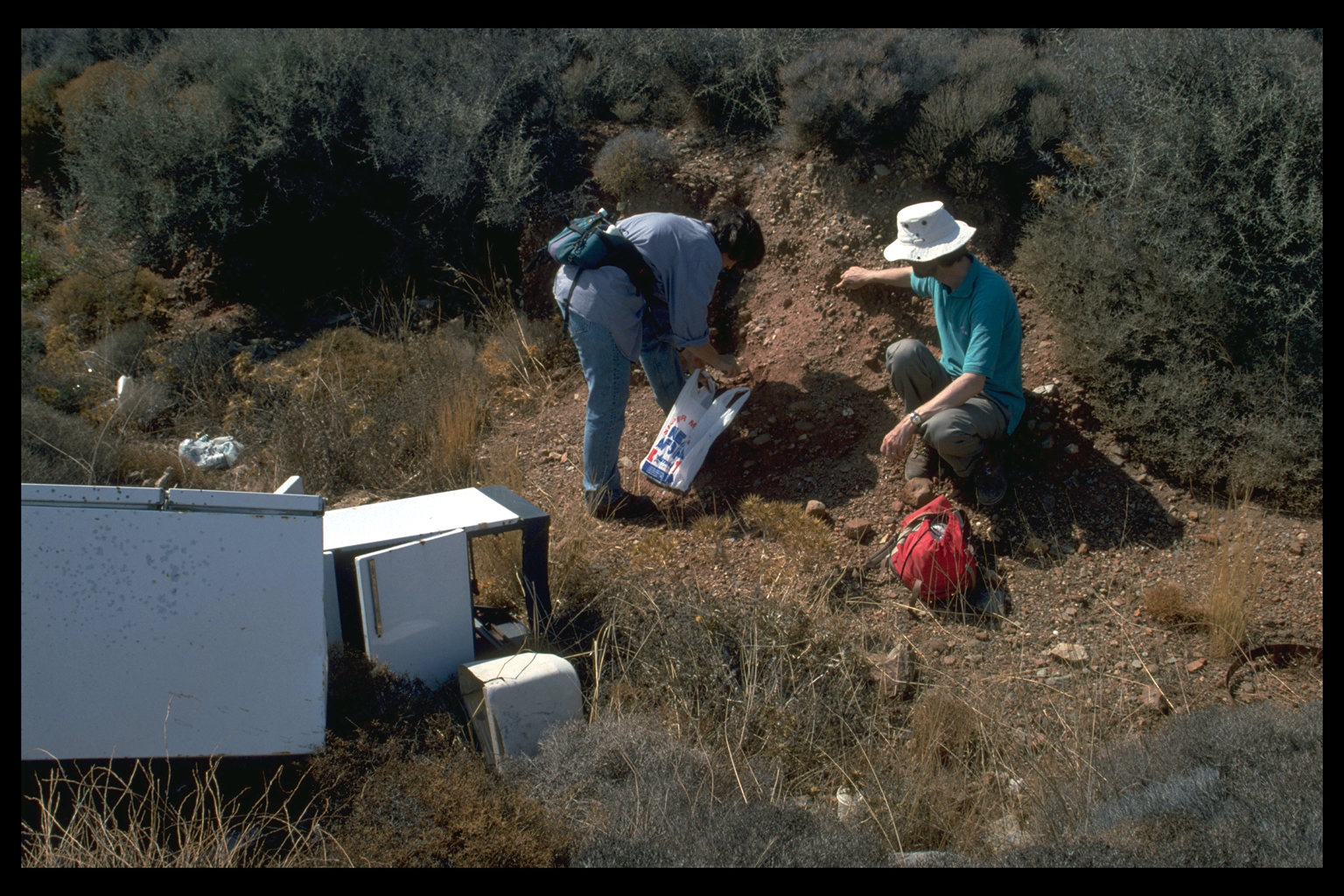
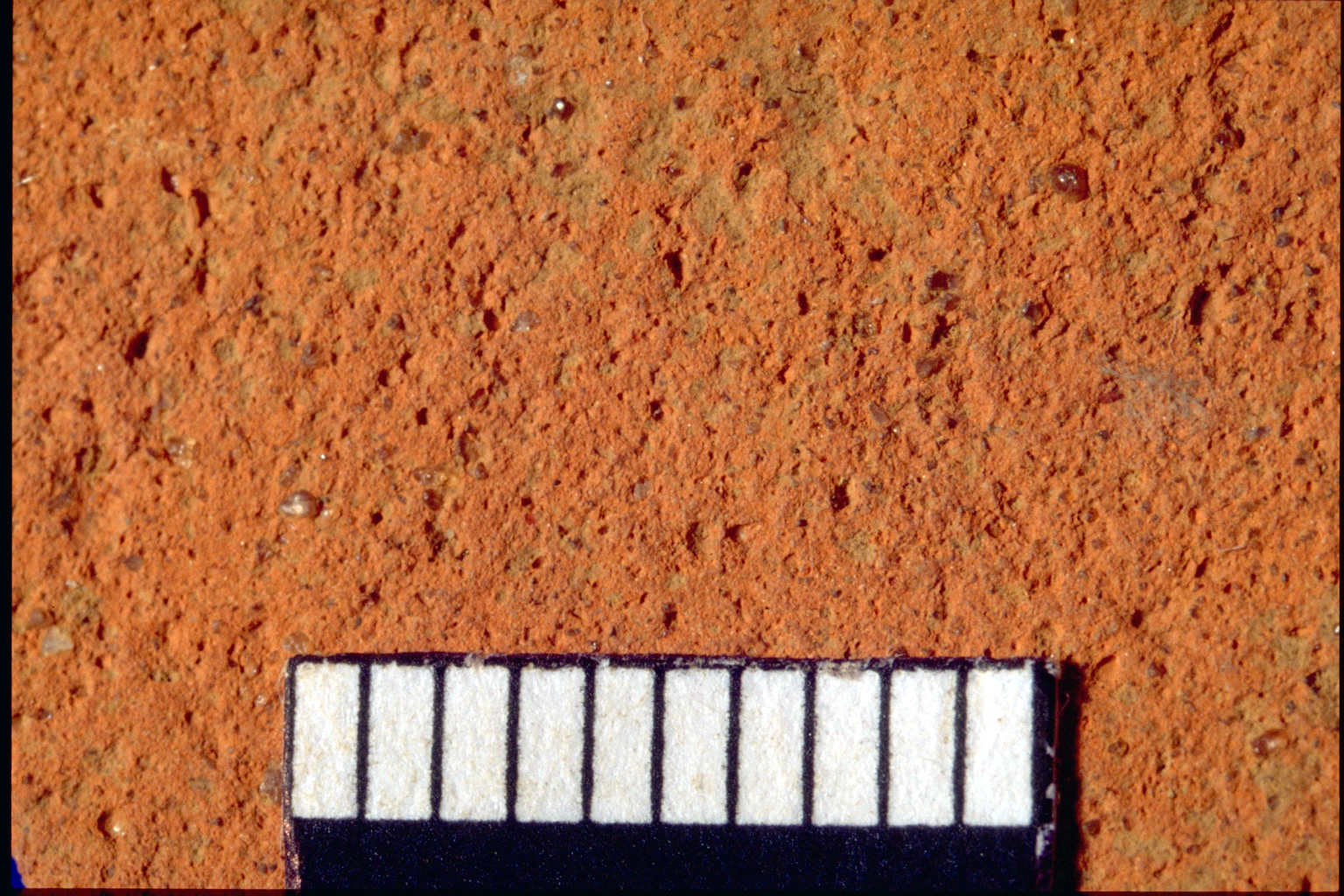
is geologically rare in Sphakia, but at a site in Region 8, we have seen
earth with suitable looking inclusions, and we have wondered if it was
a possible 'clay' source for the Hamburger fabric used for these pots.
We found several Minoan potter's discs at this site, suggesting that some
pottery was certainly produced within Sphakia (though not necessarily
this fabric). Fabric
Group No. 7, Hamburger, belonging to the Mixed Metamorphic Family,
also occurs in eastern Sphakia, but seems not to be known outside the
eparchy. It is used for Minoan tripod cooking pots and other large vessels
such as pithoi. Many sherds in this fabric come from Region 8. True clay
is geologically rare in Sphakia, but at a site in Region 8, we have seen
earth with suitable looking inclusions, and we have wondered if it was
a possible 'clay' source for the Hamburger fabric used for these pots.
We found several Minoan potter's discs at this site, suggesting that some
pottery was certainly produced within Sphakia (though not necessarily
this fabric).
 Some
sherds are immediately datable because they belong to a specific ware
whose date was already known, such as African Red Slip (in our table as
FINE/MEDIUM FINE FABRICS: Orange Gritty Glitter
Ware). These are called index sherds (for example, a plate rim from
Ag. Eustratigos, 8.38). Some
sherds are immediately datable because they belong to a specific ware
whose date was already known, such as African Red Slip (in our table as
FINE/MEDIUM FINE FABRICS: Orange Gritty Glitter
Ware). These are called index sherds (for example, a plate rim from
Ag. Eustratigos, 8.38).
Some sites seem to have had only one chronological phase; our dates for
these target sites are based on known pottery shapes and wares. Target
sites such as Ag. Eustratigos (8.38)
are useful because the fabrics not already known can be assumed to belong
to the same chronological phase. This assumption can then be tested at
other sites.
In some cases we have been able to compare our material with pottery
from the few sites excavated in Sphakia. One example of this is the Graeco-Roman
material from the cemeteries at Ag. Roumeli, which we examined briefly
with the kind permission of Drs Y. Tzedakis and Melpo Pologeorgi.
By looking at index sherds and target sites from the same chronological
phase, it is possible to get an idea of which wares are chronologically
linked, and to suggest suites of associated fabrics.
The final stage is to suggest a date for specific fabrics and sherds.
II. Other Information for Pottery Analysis, including Fabric Analysis
Excavated ancient potters' quarters can provide information about where
and how pottery manufacture was organised. Examples are known at Corinth
(Greece), for various wares of the Archaic and Classical periods (Stillwell
1952; Salmon 1984: 33 with site plan; 101-116; Sparkes 1991: 8-13); and
at Phocaea (Turkey), for Phocaean Red Slip, formerly late Roman 'C' Ware
(Hayes 1972, 1980, 1997).
Similarly, ancient texts make it clear that potters routinely made decisions
about the production of different fabrics, and that these fabrics were
distinguished by the people using the vessels; see for example the a third
century A.D. papyrus from Oxyrhynchus in Egypt, which discusses the precise
arrangements for leasing premises for pottery manufacture (Cockle 1981).
Until World War II, most village communities in the Aegean still used
ceramic vessels for almost all cooking, eating, storage, and transport,
as well as for some 'industrial' purposes such as beehives or raki production.
Archaeologists were quick to realise that traditional pottery could provide
parallels for the ancient world. Thus when Xanthoudidis (1927) was studying
Minoan potter's discs, he included, as an analogy, an ethnographic account
of their use by contemporary potters from Thrapsano, working in the Knossos
area. More recently Voyatzoglou has recorded more details of the Thrapsano
pottery system (1974, 1984); and Christakis (1996) has once again used
Thrapsano potters as part of a suggestion that Minoan pithos-makers were
also itinerant (See also a video on pottery production at Thrapsano: Kohout
and Betancourt (1999)). .
Casson looked at island pottery in the 1930s, and discussed the economics
of pottery production and distribution, chiefly by sea. He published a
memorable photograph of a sailing vessel with its cargo of stamnoi on
the dock at Chalcis in Euboea (Casson 1938; 1951: plate, b). Continuing
in the same tradition, Blitzer recorded traditional pottery-making in
Kentri near Ierapetra (1984). She also produced a major ethnoarchaeological
study of the koroneiko, a large storage vessel made on the Greek mainland
in the 19th and 20th c., from manufacture to distribution to use, again
as an analogy with pottery exchange in the late Bronze Age Aegean (Blitzer
1990; and cf. the work of Vallianos and Padouva for 19th - 20th c. pottery
on Crete). Scholars also draw on other pottery traditions to suggests
possibilities (Freestone and Gaimster 1997).
Scientific analyses have become part of pottery analysis and can be extremely
useful for fabric work (Riley 1983, again with reference to Minoan pithoi;
Jones 1986; Tzedakis and Martlew 1999). Experimental archaeology (making
ancient pots using local and other clay sources, trying different firing
techniques) can also play a role: Vitelli (1987) was able to answer a
number of questions about the Neolithic pottery from Franchthi Cave as
a result of the experimental work that she and her students did. In terms
of research design for the study of pottery, archaeologists now routinely
look at all stages in the life of ancient ceramic vessels, from production,
to transport and exchange, to consumption, as Blitzer did for the koroneika
(Day, Wilson, Kiriatzi 1997).
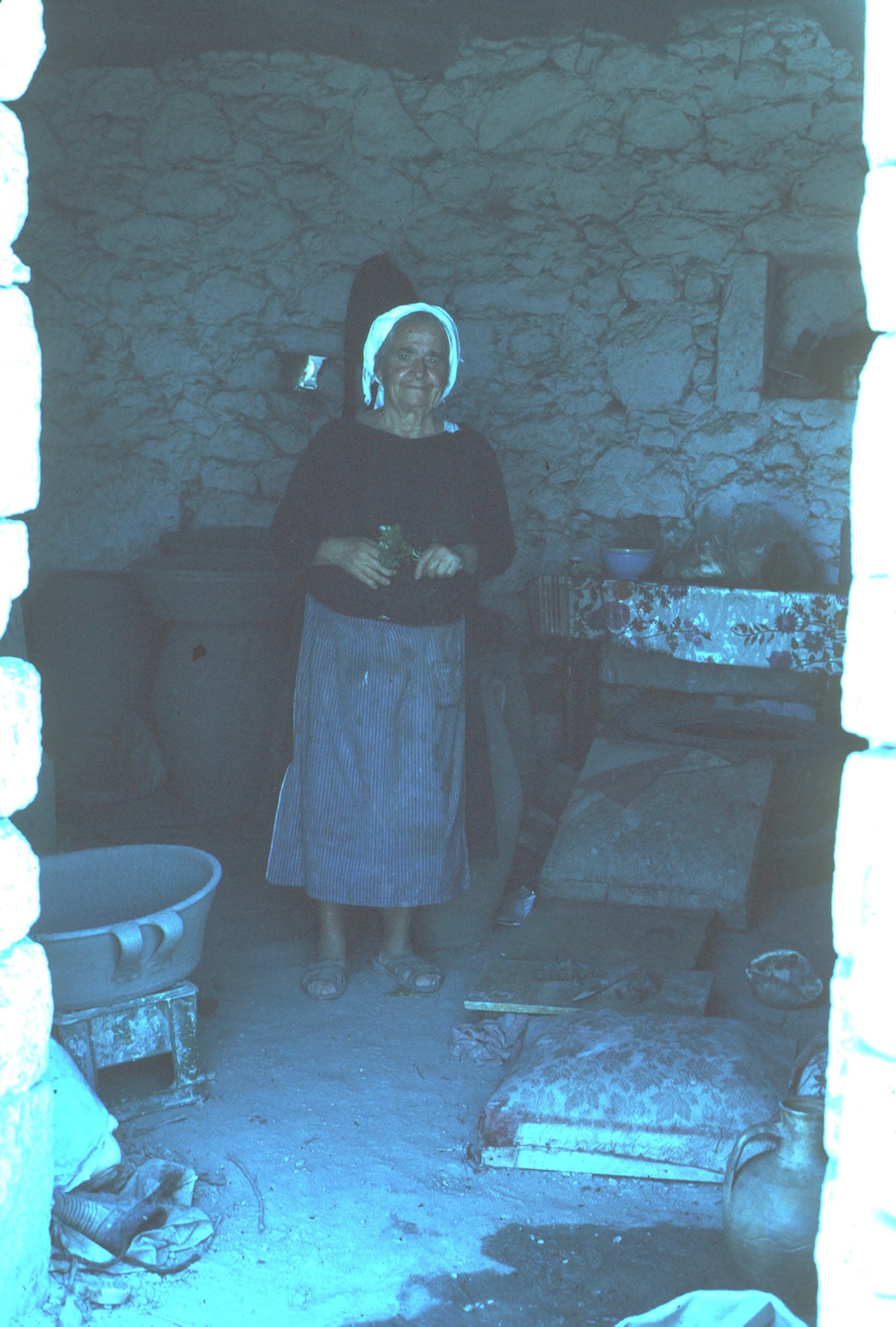
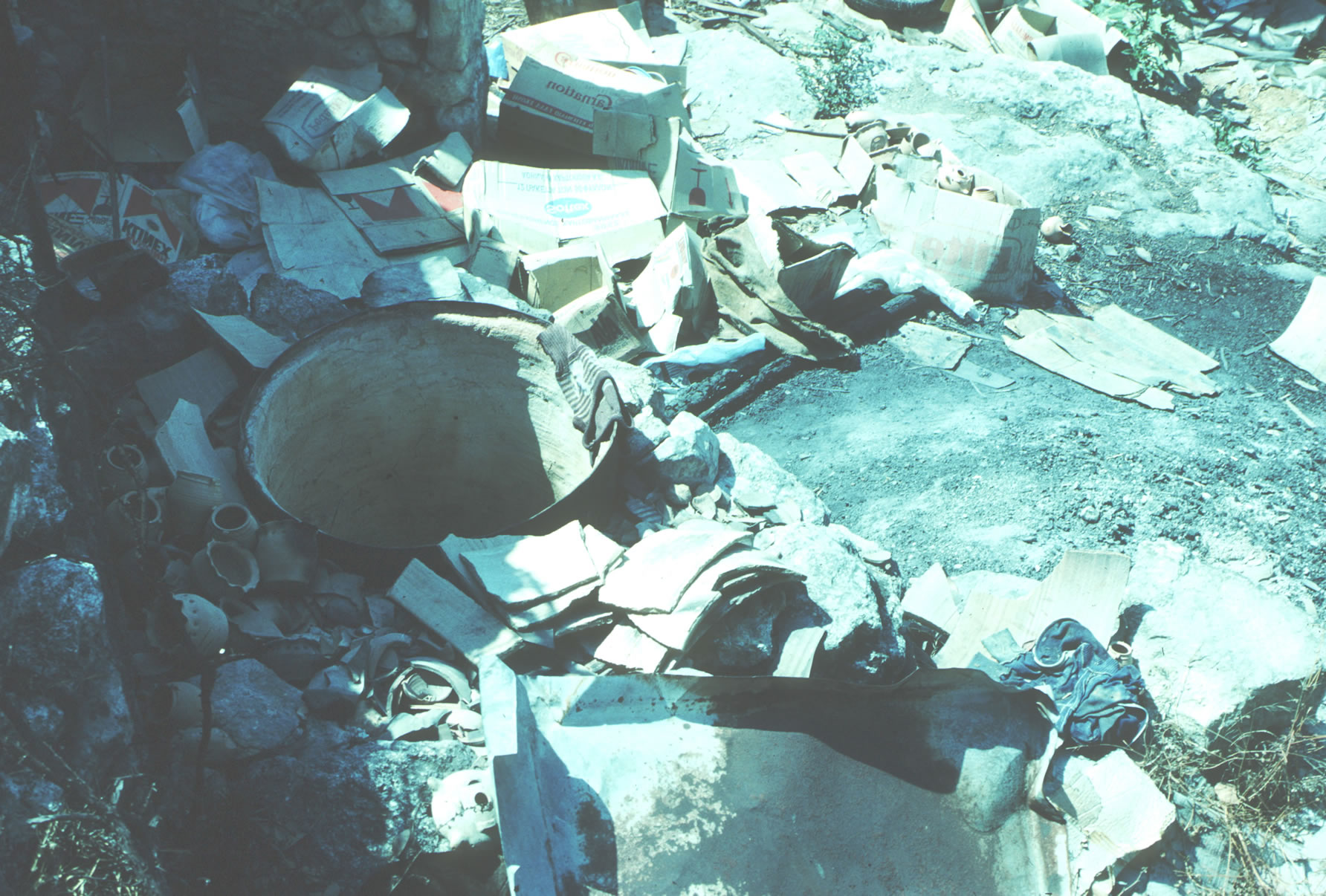
By the time we began our fieldwork in Sphakia, most people routinely
cooked over gas, rather than an open fire. The adoption of metal saucepans,
which can be used on both, has meant that ceramic cooking-pots (tsoukalia)
are no longer used In the later 1980s, piped water came to the village
of Anopoli; we saw the last use of the water jars (stamnes), which were
set on purpose-built stamnostates to accommodate their rounded bottoms.
Nonetheless it has been possible to talk to people about the relatively
recent past when more, and more different, ceramic vessels were used in
Sphakia, as elsewhere on Crete. We have therefore asked people in Sphakia
about the pottery they used (where it was made, how it was distributed,
etc). Among other things we learnt that at least one archaeological site
was 'mined' for ancient coarseware sherds, which were used to line the
traditional ovens built on or next to houses! We have collected earth
from a possible clay source in Sphakia (see above, on the Hamburger fabric)
and hope to attempt some experimental replication ourselves.
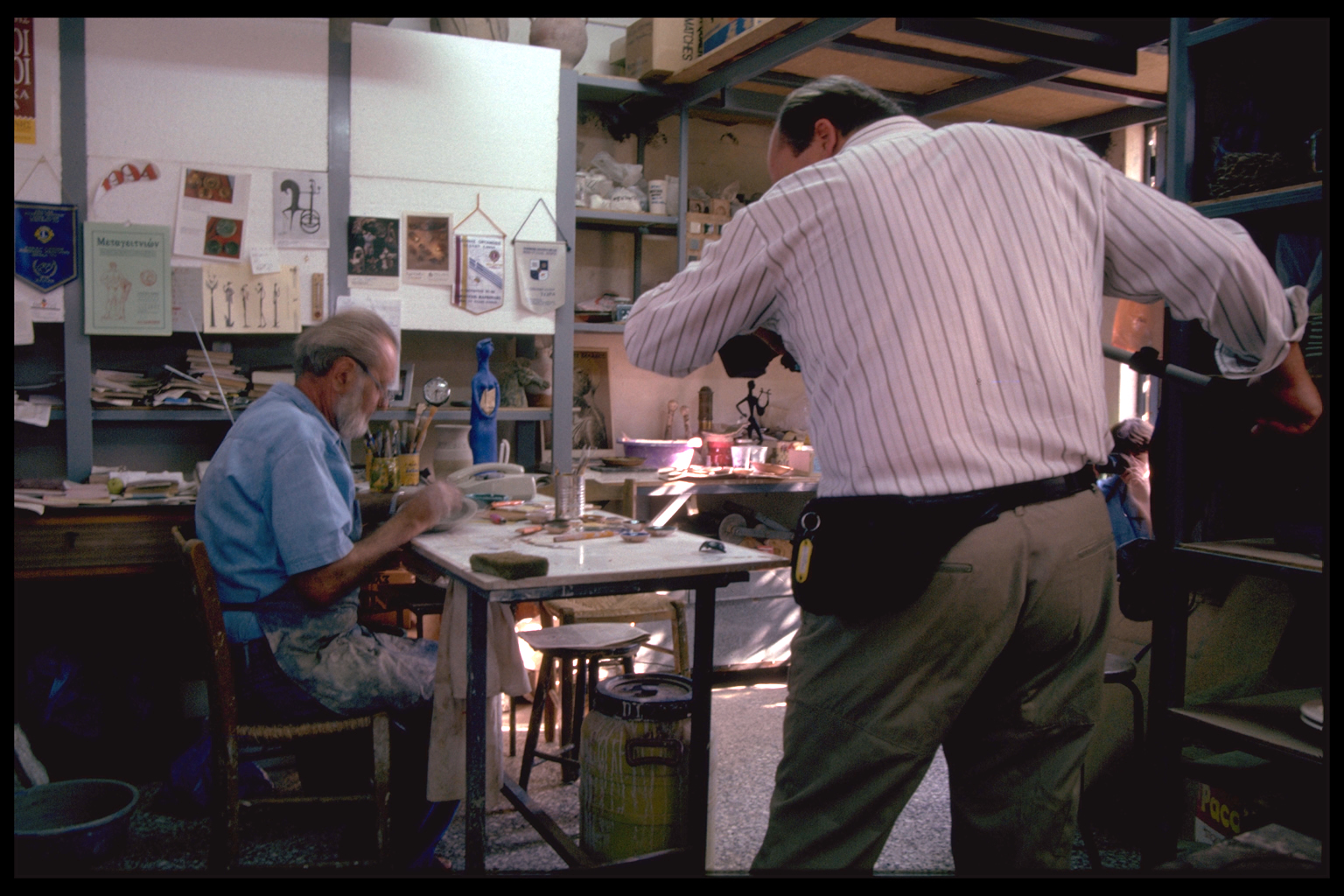
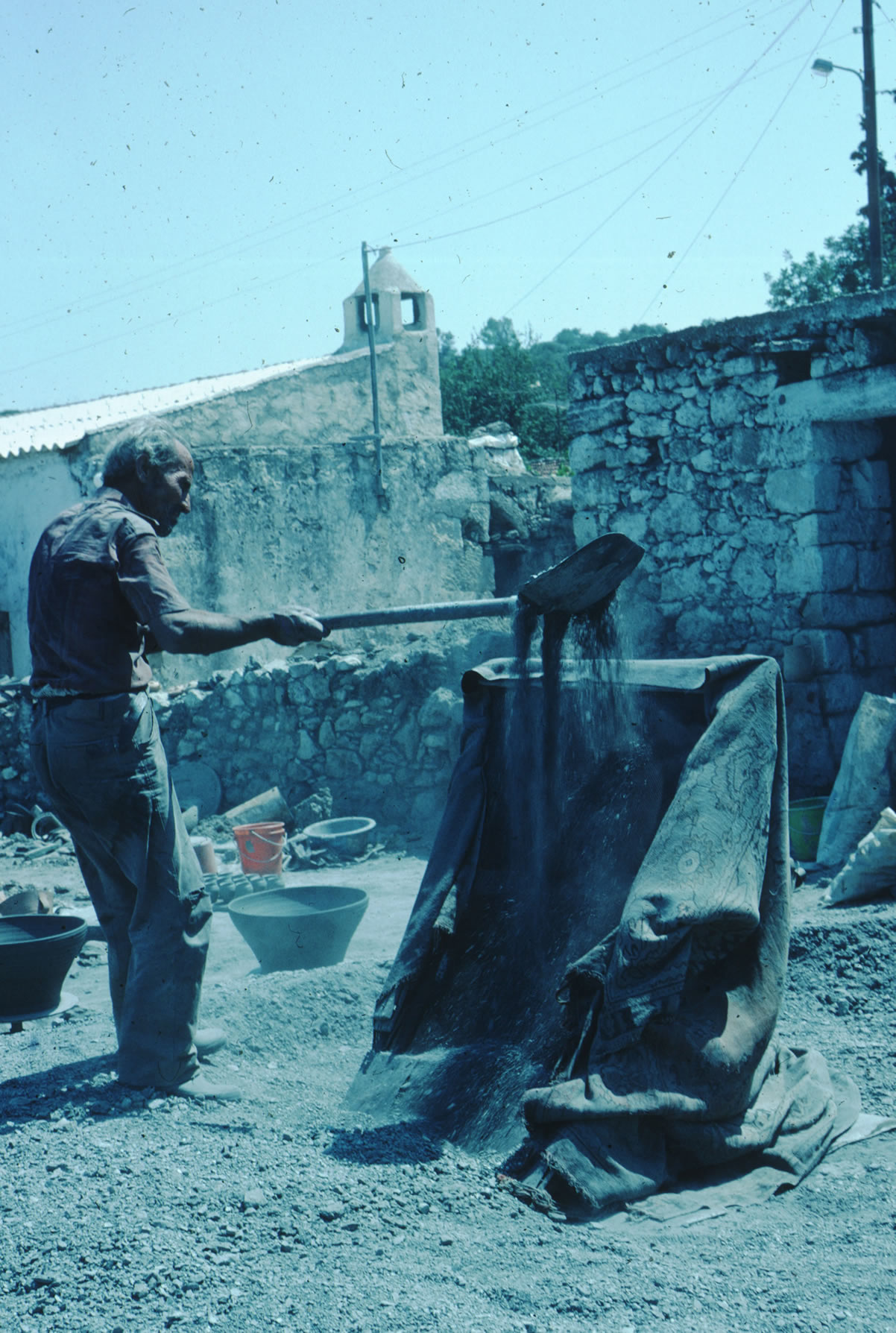
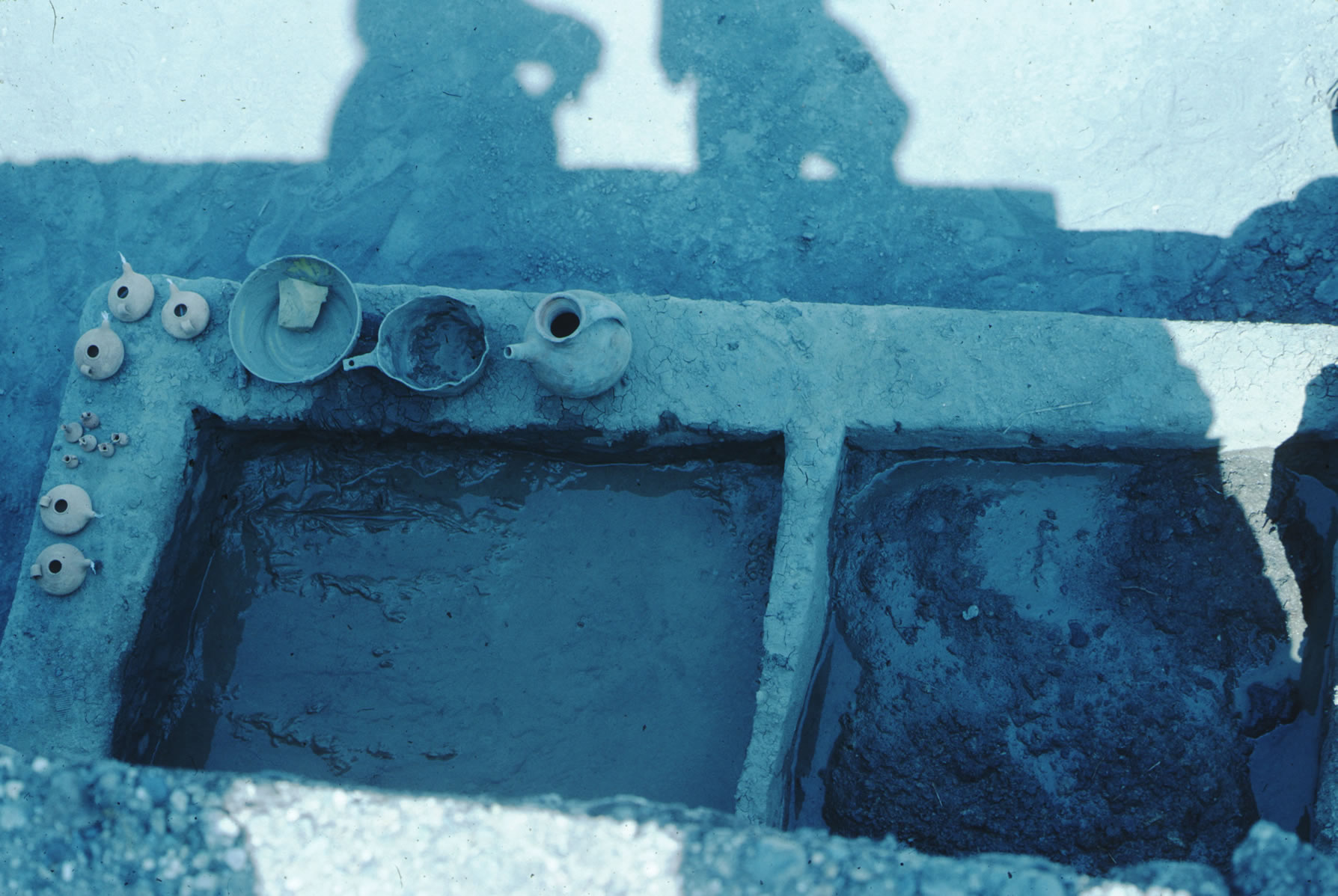
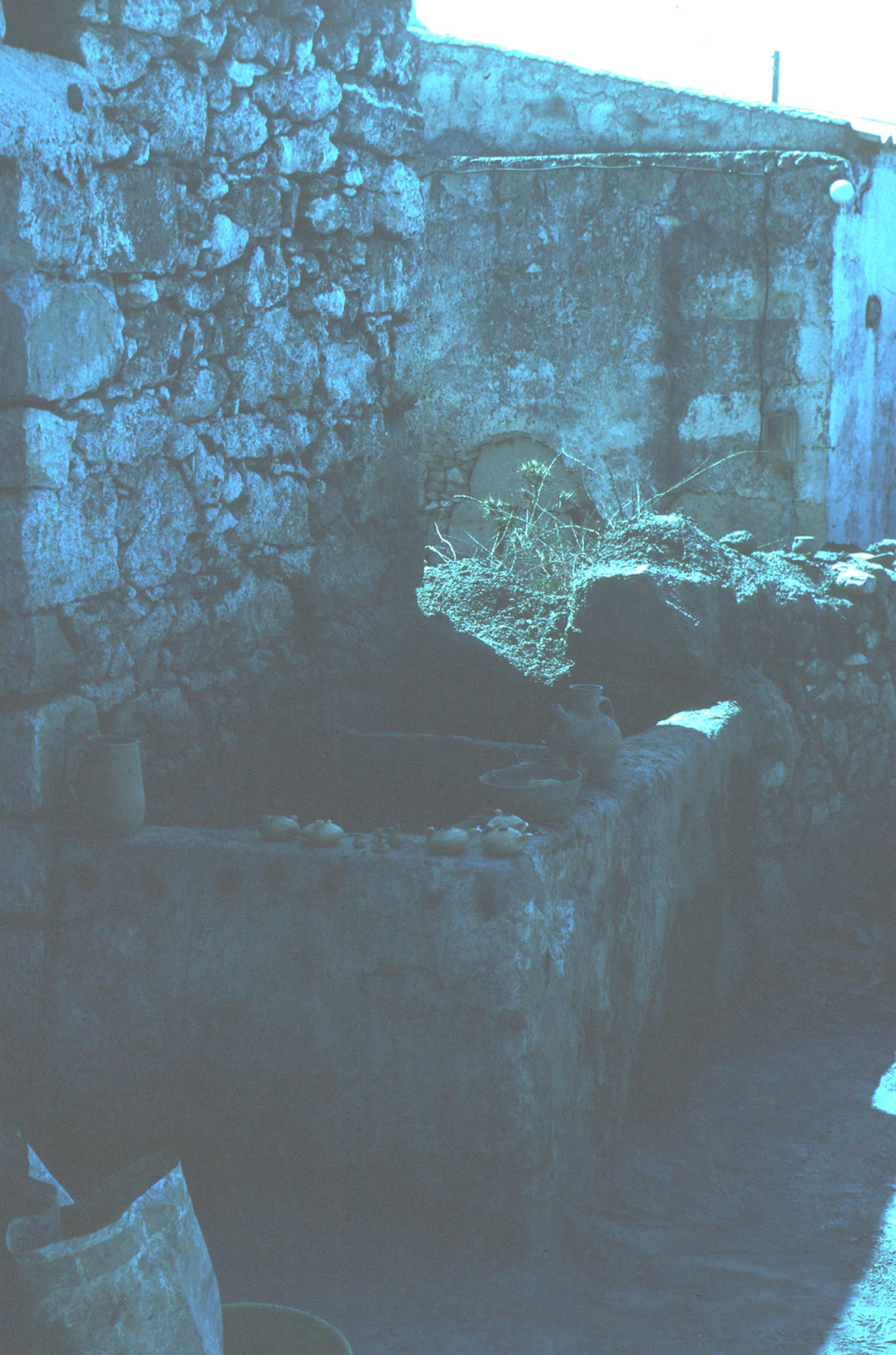
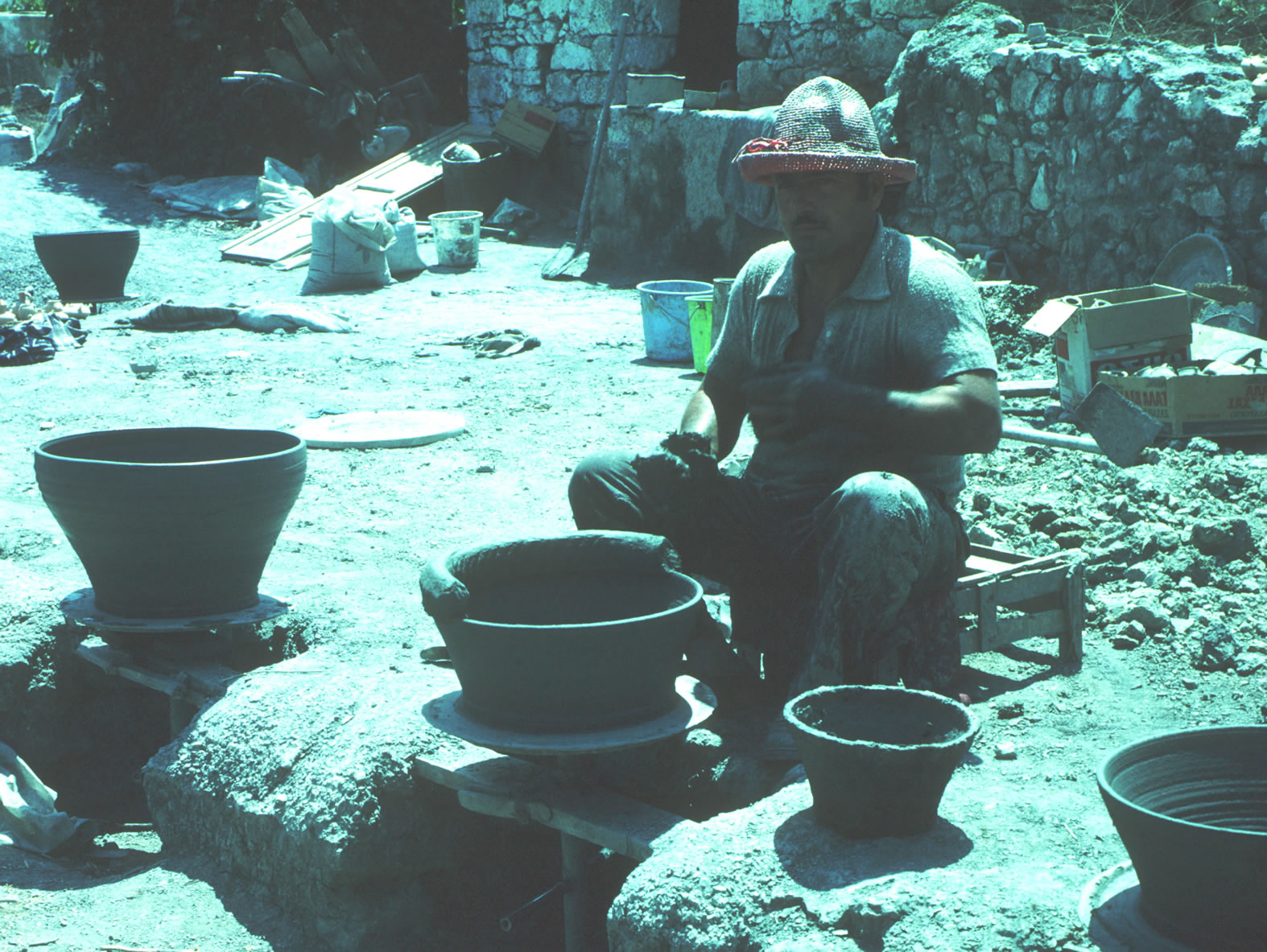
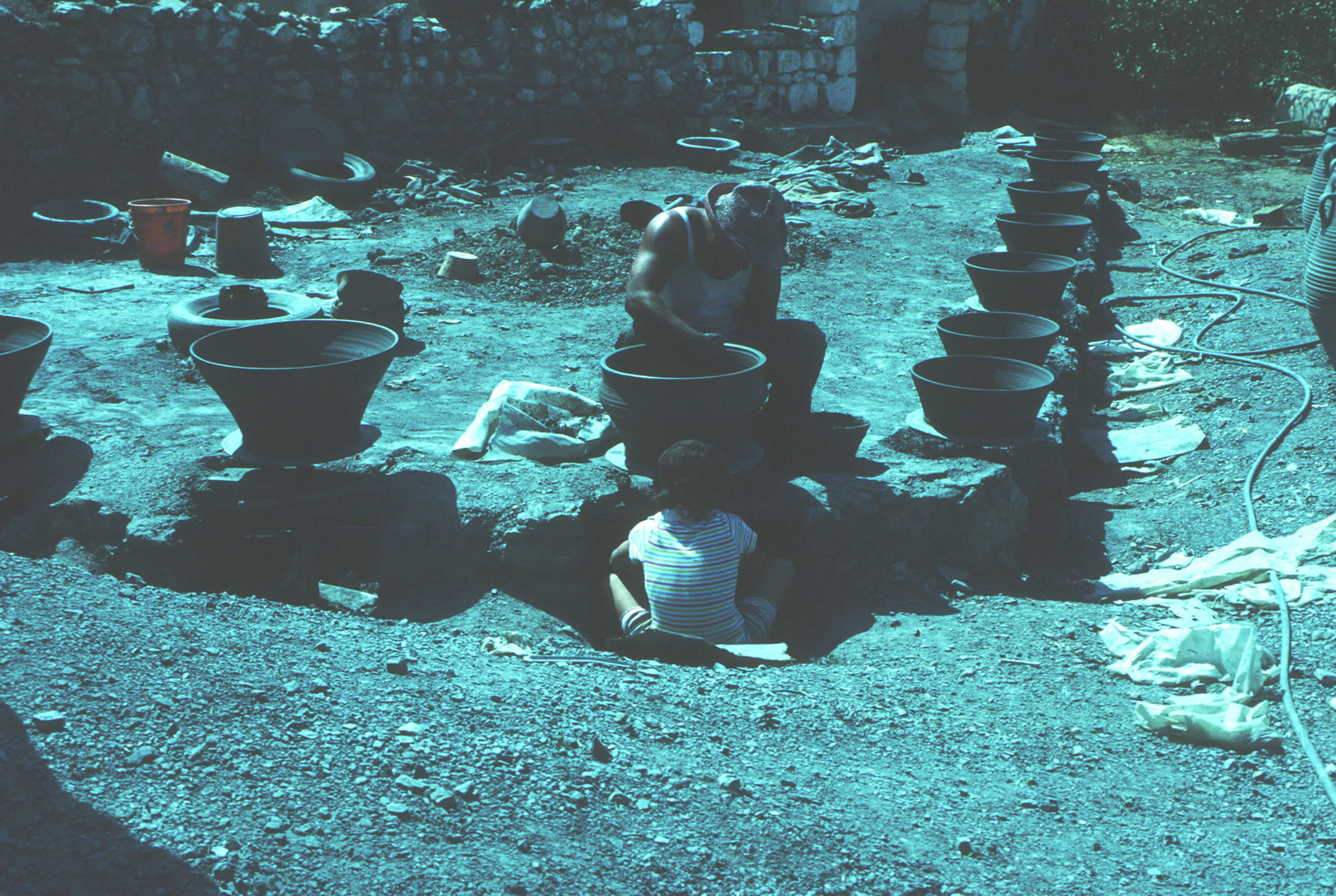
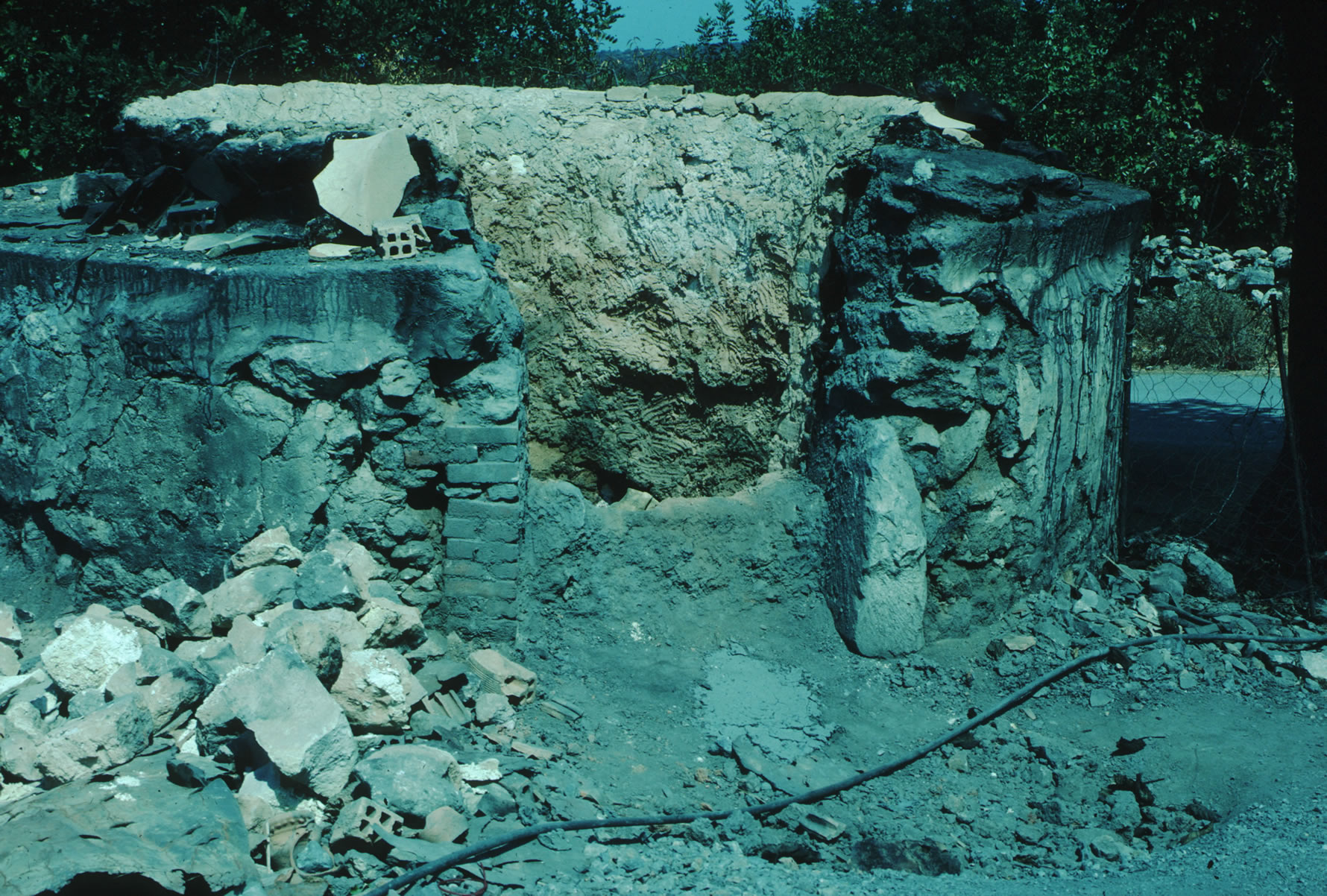
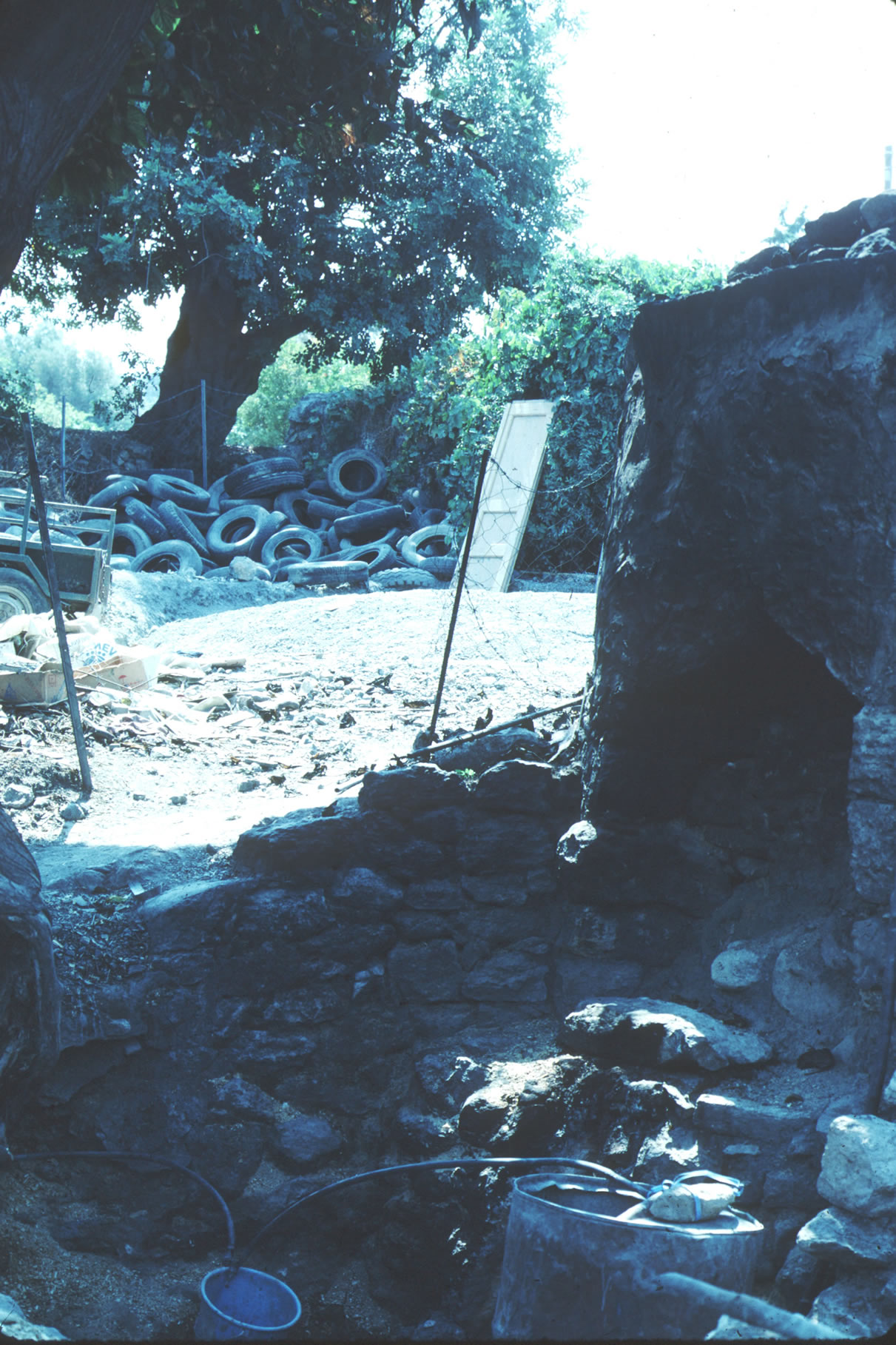
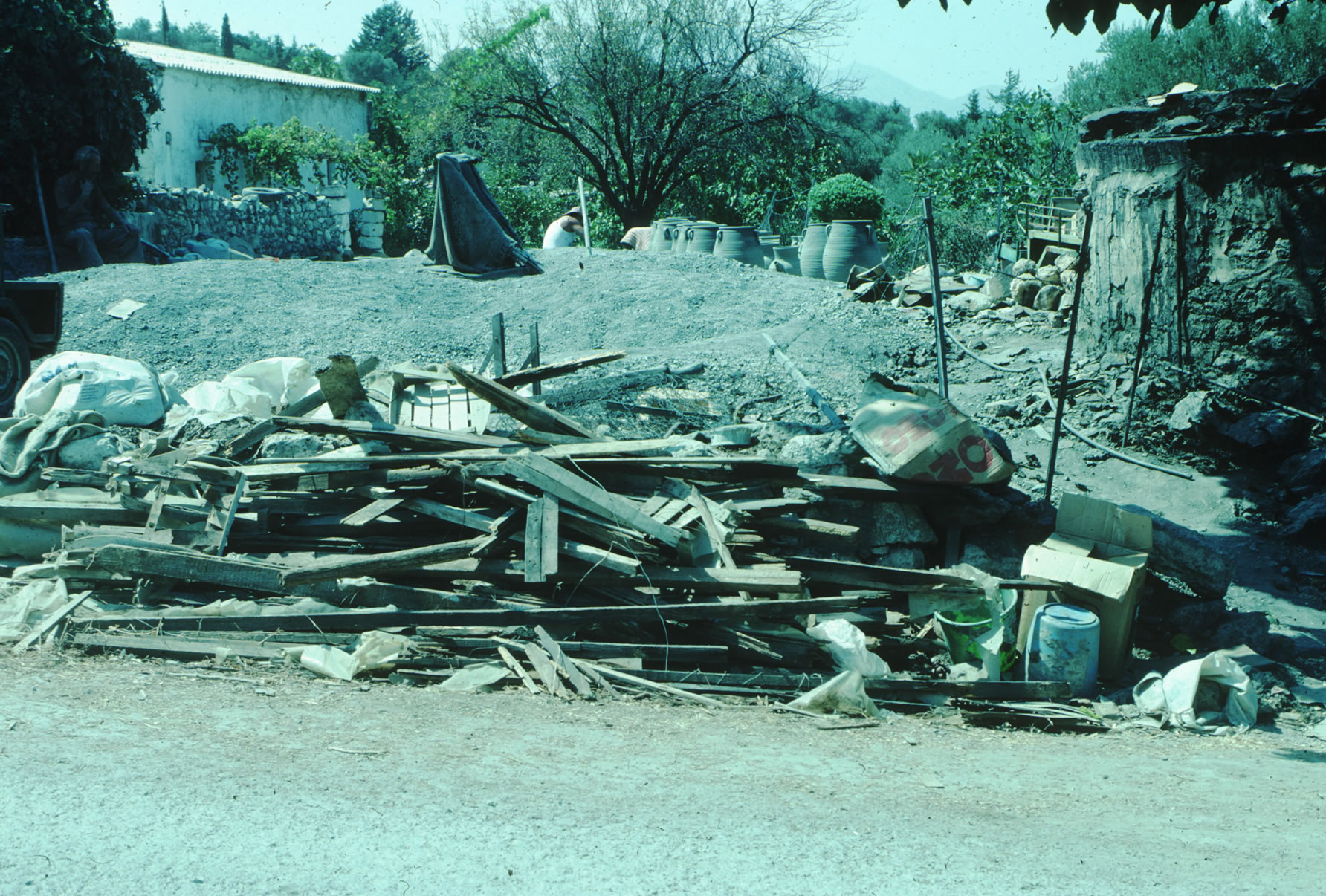
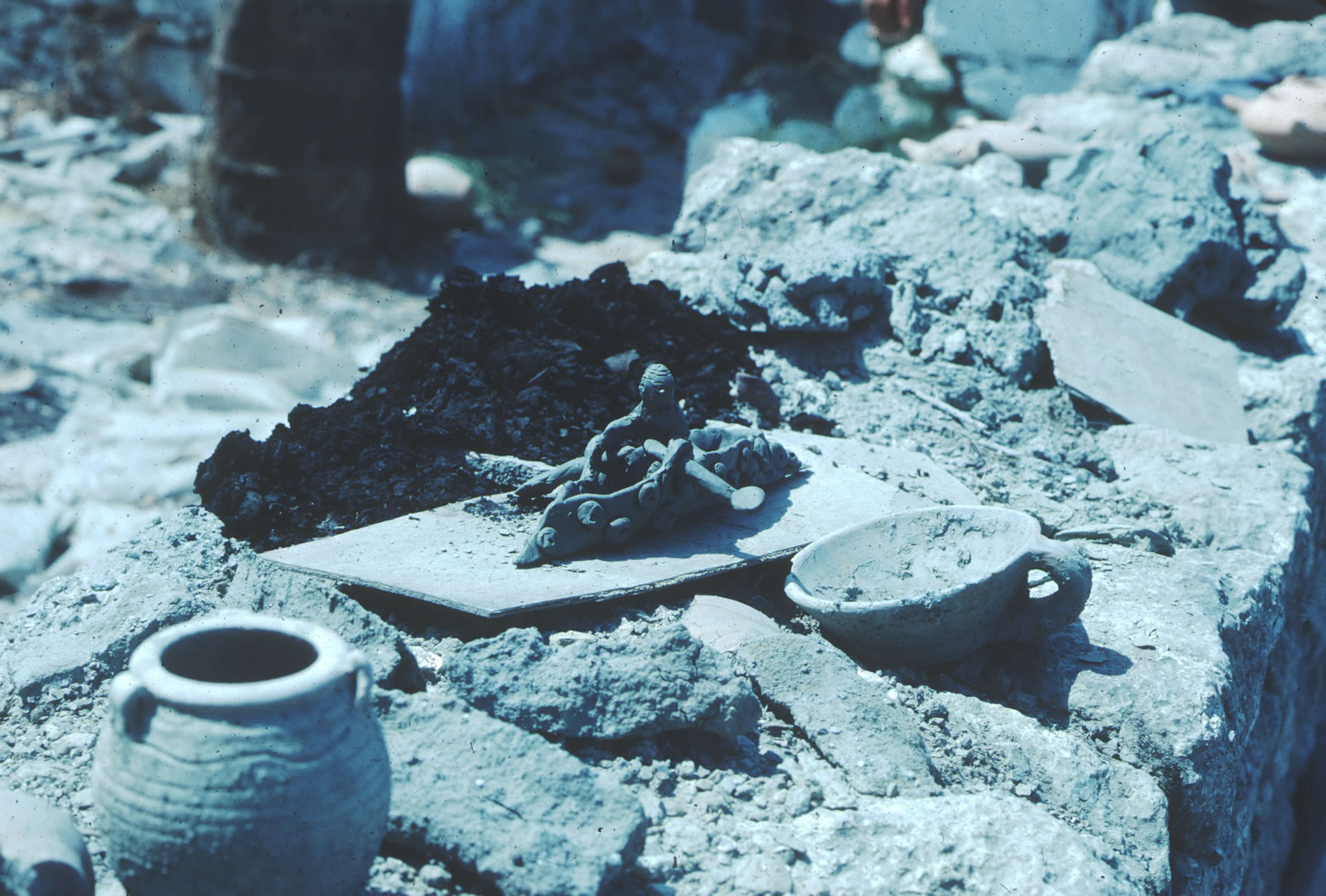
 Outside
Sphakia we have talked to contemporary potters, such as Kostas Dandolos
(making pithoi in Margarites in 1986;; and Christophoros Sklavenitis,
who makes modern versions of Byzantine sgraffito ware in Khania, and has
done research of his own on local pottery traditions (short section on
this in the Survey video, Nixon and Price 1995;
Sklavenitis 1996). Outside
Sphakia we have talked to contemporary potters, such as Kostas Dandolos
(making pithoi in Margarites in 1986;; and Christophoros Sklavenitis,
who makes modern versions of Byzantine sgraffito ware in Khania, and has
done research of his own on local pottery traditions (short section on
this in the Survey video, Nixon and Price 1995;
Sklavenitis 1996).
References for Pottery Analysis
Armstrong, Pamela and Helen Hatcher 1997. 'Byzantine and Allied Pottery,
Phase 2: Past Works on Materials Analysis and Future Prospects', in Materials
Analysis of Byzantine Pottery,
ed. H. Maguire, Washington, D.C.: Dumbarton Oaks Research Library and
Collection, 1-8.
Betancourt, Philip P. 1985. A History of Minoan Pottery, Princeton: Princeton
University Press
Blitzer, Harriet 1984. Traditional Pottery Production in Kentri, Crete:
Workshops, Materials, Techniques, and Trade, in East Cretan White-on-Dark
Ware edited by Philip P. Betancourt, Philadelphia: University Museum,
University of Pennsylvania, 143-158
Blitzer, Harriet 1990. Koroneïka: Storage-jar Production and Trade
in the traditional Aegean, Hesperia 59: 675-711
Casson, Stanley 1938. The Modern Pottery Trade in the Aegean, Antiquity
12: 464-473
Casson, Stanley 1951. The Modern Pottery Trade in the Aegean: Further
Notes, Antiquity 25: 187-190
Christakis, K.S. 1996. Craft Specialisation in Minoan Crete: The Case
for Itinerant Pithos Makers, Aegean Archaeology 3: 63-94
Cockle, Helen 1981. Pottery Manufacture in Roman Egypt. A New Papyrus,
Journal of Roman Studies 71 : 87-97
Day, Peter, David Wilson, and Evangelia Kiriatzi 1997. Reassessing Specialization
in Prepalatial Cretan Ceramic Production, in Techne, edited by Robert
Laffineur and Philp Betancourt, Aegaeum 16: 275-189
Freestone, Ian and David Gaimster (eds) 1997. Pottery in the Making: World
Ceramic Traditions, London: British Museum Press
Haggis, Donald and Margaret Mook 1993. The Kavousi Coarse Wares: A Bronze
Age
Chronology for Survey in the Mirabello Area, Crete. AJA 97: 265-293
Hampe, Roland and Adam Winter 1962. Bei Töpfern und Töpferinnen
in Kreta, Messenien, und Zypern, Mainz: Habelt
Hampe, Roland and Adam Winter 1965. Bei Töpfern und Zieglern in Süditalien,
Sizilien, und Griechenland, Mainz: Habelt
Hayes, J.W.H. 1972. Late Roman Pottery, London: British School at Rome
Hayes, J.W.H. 1980. Late Roman Pottery. A Supplement, London: British
School at Rome
Hayes, J.W.H. 1997. A Handbook of Mediterranean Roman Pottery, London:
British Museum Press
Jones, Richard E. 1986. Greek and Cypriot Pottery: A Review of Scientific
Studies, Athens: British School at Athens
Kohout, Frank and Philip Betancourt 1999. The Potters of Thrapsano: A
Modern Workshop on Crete with Clues to Ancient Technology, Cinegraphic
Films, Philadelphia PA. [Available from Museum Publications, University
of Pennsylvania Museum, 34th and Spruce Sts., Philadelphia, PA 19104]
Lewis [now Robinson], H. 1983. The Manufacture of Early Mycenaean Pottery.
University of Minnesota PhD. dissertation. Ann Arbor, Michigan: University
Microfilms.
Me amorphi mia stamna 1999. Athens: Kentro Meletis Neoteris Kerameikis
Moody, Jennifer A. 1985. The Development of A Bronze Age Coarse Ware Chronology
for the Khania Region of West Crete, Temple University Aegean Symposium
10: 51-65
Moody, Jennifer A. 1987. The Environmental and Cultural Prehistory of
the Khania Region of West Crete, PhD dissertation, University of Minnesota
Nixon, Lucia and Simon Price 1995. The Sphakia Survey (Greece): Methods
and Results, Oxford: Educational Technology Resources Centre (50 minute
video; further information and clips on this web
site)
Riley, John 1983. The Contribution of Ceramic Petrology to our Understanding
of Minoan Society, in Minoan Society. Procedings of the Cambridge Colloqium
1981, edited by Olga Krzyszkowska and Lucia Nixon, Bristol Classical press,
283-292
Salmon, J.B. 1984. Wealthy Corinth. A History of the City to 333 B.C.,
Oxford: Clarendon
Sklavenitis, Christophoros 1996. Kerameika Kentra kai Laikoi Aggeioplastes
tis Dytikis Kritis, in Kerameika Ergasteria apo tin Arkhaiotitia os Simera,
edited by E. Gavrilaki, Rethymnon.
Sparkes, Brian 1991. Greek pottery: An Introduction, Manchester: Manchester
University press
Stillwell, Agnes 1952. The Potters' Quarter: The Terracottas. (Corinth
XV.ii), Princeton: American School of Classical Studies at Athens
Tomber, Roberta and John Dore 1998. The National Roman Fabric Reference
Collection: A Handbook, London : Museum of London Archaeology Service
Tzedakis, Yannis and Holley Martlew 1999. Minoans and Mycenaeans: Flavours
of Their Time, Athens: Kapon
Vallianos, C. and M. Padouva 1986. Ta Kritika Aggeia tou 19ou kai 20ou
Aiona, Vorroi, Crete: Museum of Cretan Ethnology
Vitelli, Karen D. 1987. Greek Neolithic Pottery by Experiment, in Pots
and Potters. Current Approaches in Ceramic Archaeology, edited by Prudence
M. Rice, Institute of Archaeology, Monograph XXIV, Los Angeles: University
of California, Los Angeles, 113-131
Voyatzoglou, M. 1974. The Jar Makers of Thrapsano in Crete, Expedition
16: 18-24
Voyatzoglou, M. 1984. Thrapsano, Village of Jar Makers, in East Cretan
White-on-Dark Ware edited by Philip P. Betancourt, Philadelphia: University
Museum, University of Pennsylvania, 130-142
Xanthoudidis, Stephanos 1927. Some Minoan Potter's Wheel Discs, in Essays
in Aegean Archaeology, edited by Stanley Casson, Oxford: Clarendon, 111-128.
|