|
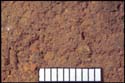
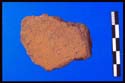
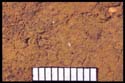
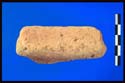
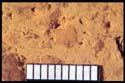
4. Hearth Classic
|
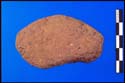
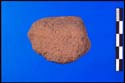
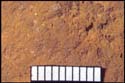
The surface is rosy red to red brown in colour (2.5YR 5/6), medium
hard, smooth to bumpy to the touch, and occasionally burnished.
The core is usually dark brown (10YR 4/3), and medium to hard. Inclusions
are soft yellow, tan, pink or red claystones/siltstones or shales,
and mixed local sands. The core is usually dark brown. Macroscopic
inclusion density is 10-20%.
|
The most characteristic shapes are broad strap handles, lugs or
flat, thick body sherds with broad plain ribs. One pronged rim.
Many of the sherds in this fabric are heavily burned.
|
The strap handles, lugs and pronged rim indicate an Final Neolithic/Early
Minoan I date for the fabric as a pottery material. Its use as hearth/
oven lining material continues indefinitely.
|
Within the Sphakia survey area, Hearth Ware is most common in Regions
3, 4, 6. Hearth Ware is also known in local versions from the Akrotiri
(Khania Area Survey Project Final Neolithic/Early Minoan I sites),
Nerokourou (Final Neolithic), Debla (Early Minoan I), Atsipadhes
Peak Sanctuary (Final Neolithic phase), Vrokastro (Final Neolithic/Early
Minoan), and Phourni well (Final Neolithic).
|
|
6. Silver-Blue Spotted ware
|
A soft powdery buff fabric with a harder pinkish core. The distinctive
inclusions are siltstone/claystones that have turned a sliver blue
colour, probably due to firing techniques. Other inclusions include
quartz, quartz phyllite, phyllite, red ferrous and occasional silver
mica. It can occur as a medium fine ware or a coarse ware. Often
preserves traces of black paint.
|
Most commonly a "jar" or bowl shape, but occasionally cups.
|
The fabric seems to largely date to Late Minoan III-Early Iron
Age in Sphakia, though the two pieces from Birmani (7.12) may be
Middle Minoan.
|
Confined to Regions 6, 7 and 8 in Sphakia, i.e. the eastern half
of the eparchy. Not a common fabric in Sphakia, but relatively abundant
in Ag. Vasilios Valley Survey Project area, where it occurs in both
Middle Minoan and in Late Minoan III-Archaic. It is a common jar
ware at Middle Minoan Monasteraki. It also occurs in Vrokastro Survey
Project. Wilson and Day note it is similar to the common fabric
for Late Minoan III-Early Iron Age Malia stirrup-jars.
|