Making the Video
|
 We
made the Sphakia Survey video to explain to non-specialists the
methods and possible results of archaeological field survey. When
we tell people that we work on field survey, they immediately ask,
'Where do you excavate?' or 'What is the name of your site?'. That
is, for most people excavation remains the paradigm for archaeological
field work. We also, and more specifically, wanted to create a film
that would be useful in classroom instruction. Students taking classical
and archaeological courses, we thought, would benefit from seeing
something of field survey. We therefore created a film 50 minutes
long, divided into two 25-minute sections, to be shown complete
in one teaching slot, or in two different slots, each half followed
by discussion. We
made the Sphakia Survey video to explain to non-specialists the
methods and possible results of archaeological field survey. When
we tell people that we work on field survey, they immediately ask,
'Where do you excavate?' or 'What is the name of your site?'. That
is, for most people excavation remains the paradigm for archaeological
field work. We also, and more specifically, wanted to create a film
that would be useful in classroom instruction. Students taking classical
and archaeological courses, we thought, would benefit from seeing
something of field survey. We therefore created a film 50 minutes
long, divided into two 25-minute sections, to be shown complete
in one teaching slot, or in two different slots, each half followed
by discussion.
|
|
Video Clips
You can watch a clip from the video in either Quicktime or Real
Audio format. The latest versions of the Quicktime and Real Audio
players can both be downloaded free of charge.
|
Section 1: Methods
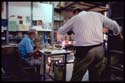 The
video takes as its focus the Sphakia Survey, which covers a long timespan,
5000 years, from the time that people arrived in Sphakia (ca 3000 BC)
to the end of the Turkish period (ca AD 1900). The first section talks
about the principles on which we (and most field surveys) work: the aim
of reconstructing the interactions of people and the landscape over long
periods of time (settlement patterns, land usage and so on); the importance
of understanding the geology; the need to integrate documents and material
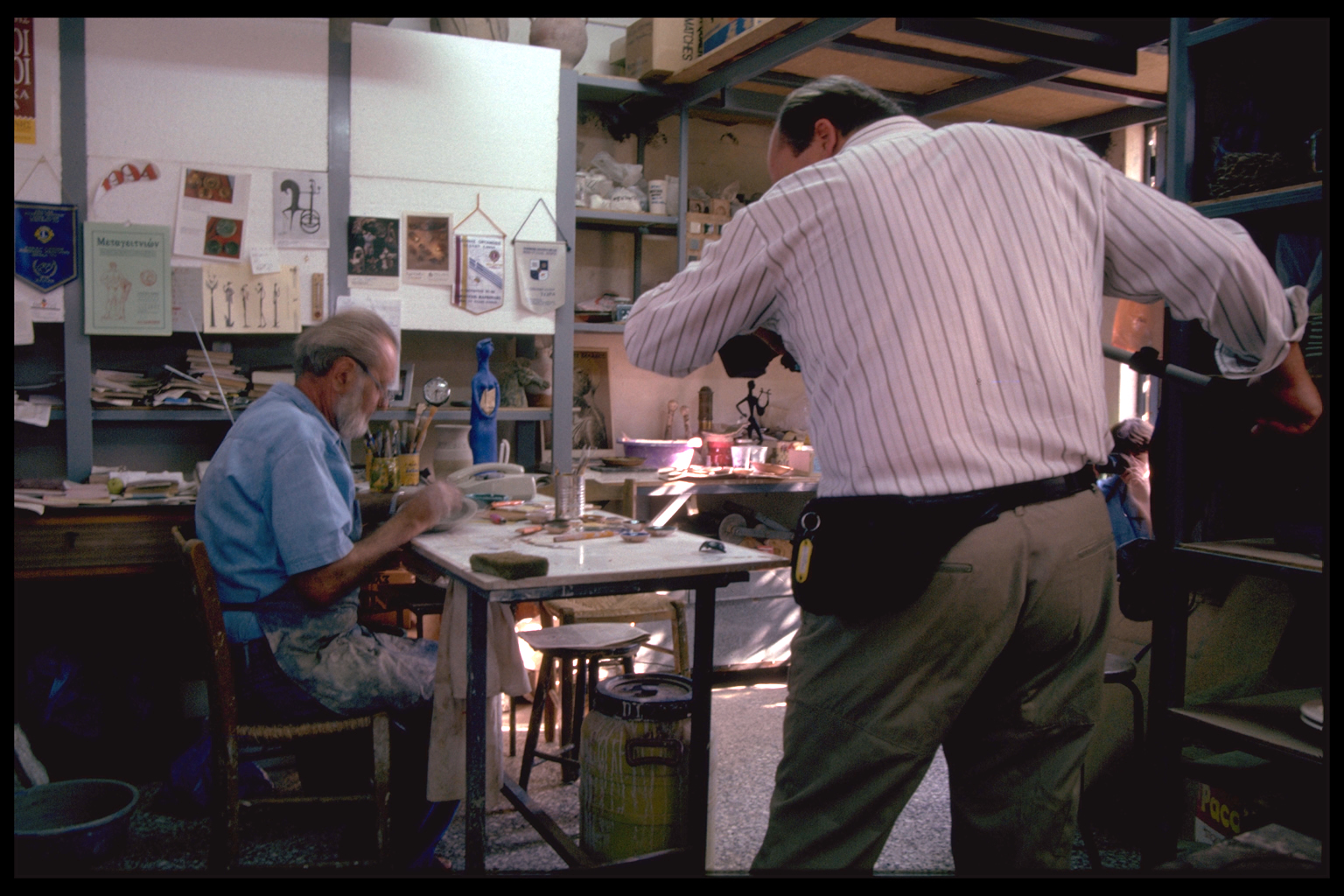
evidence; and the ways of interpreting pottery (the main source of evidence
for field surveys), including the evidence of a contemporary potter in
Khania who has studied Venetian and Turkish pottery production. The
video takes as its focus the Sphakia Survey, which covers a long timespan,
5000 years, from the time that people arrived in Sphakia (ca 3000 BC)
to the end of the Turkish period (ca AD 1900). The first section talks
about the principles on which we (and most field surveys) work: the aim
of reconstructing the interactions of people and the landscape over long
periods of time (settlement patterns, land usage and so on); the importance
of understanding the geology; the need to integrate documents and material
evidence; and the ways of interpreting pottery (the main source of evidence
for field surveys), including the evidence of a contemporary potter in
Khania who has studied Venetian and Turkish pottery production.
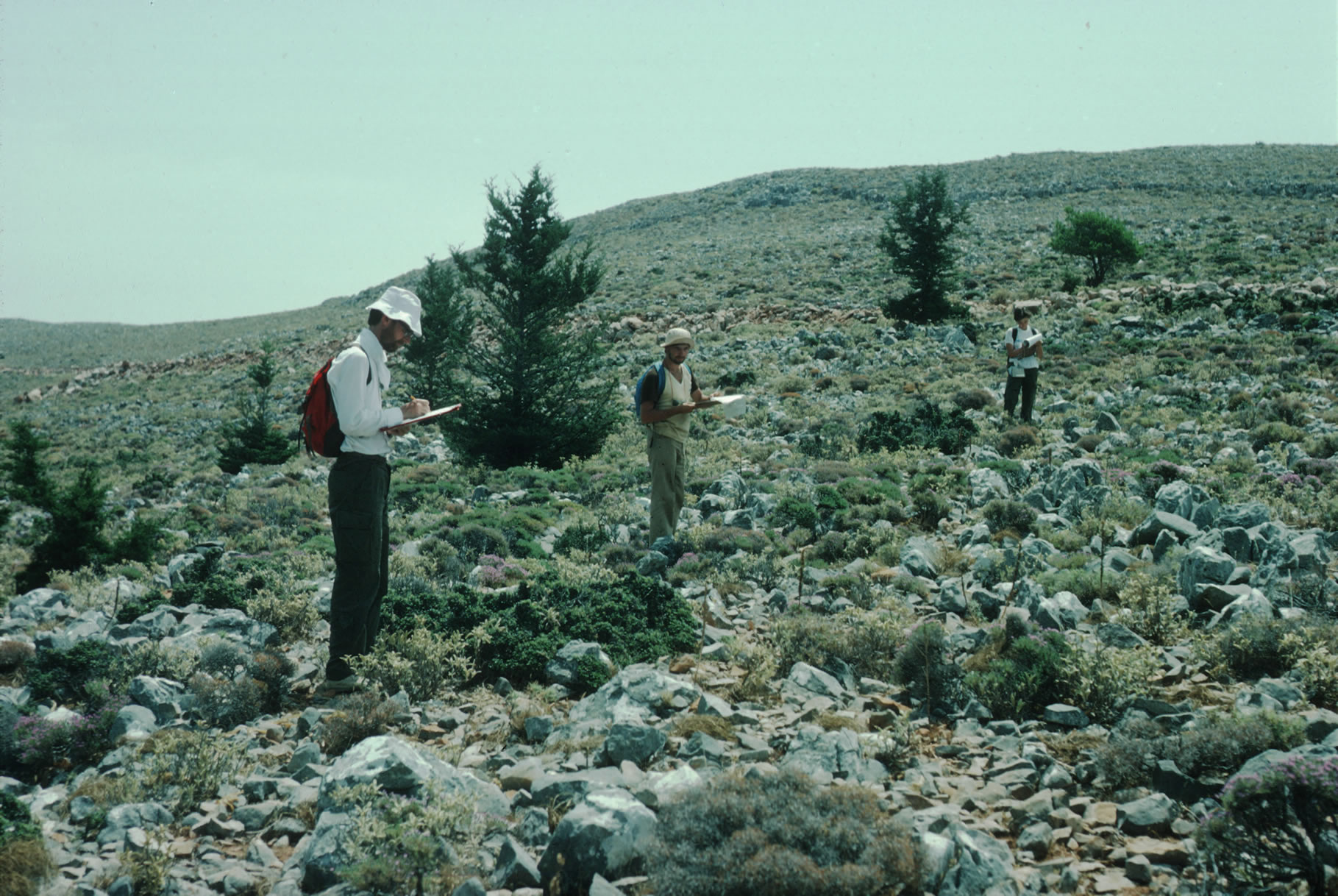
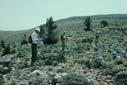 We
also discuss the question of how archaeologists find archaeological material
without excavating, and how they can be sure that what they do find is
significant. This is where film really come into its own. Books or articles
can present principles; slide lectures can show landscapes; but only moving
images can present properly the processes of field survey, of people walking
through landscapes and actually finding ancient artefacts. We
also discuss the question of how archaeologists find archaeological material
without excavating, and how they can be sure that what they do find is
significant. This is where film really come into its own. Books or articles
can present principles; slide lectures can show landscapes; but only moving
images can present properly the processes of field survey, of people walking
through landscapes and actually finding ancient artefacts.
Field survey, which aims to discover the patterns of past human interaction
with the environment, necessarily also involves patterns of present, archaeological,
investigation of that environment. Film can show the modern processes,
and thus make more vivid, and plausible, the logic of inference back to
the past.
Section 2: Results
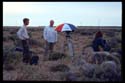 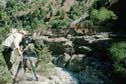 This
section is exemplary rather than definitive, showing the sorts of things
which field survey can establish. Our results were necessarily tentative
as at the time of making the film the field work was still in process.
Viewers also have to remember that what we could show in 25 minutes is
pretty limited. This
section is exemplary rather than definitive, showing the sorts of things
which field survey can establish. Our results were necessarily tentative
as at the time of making the film the field work was still in process.
Viewers also have to remember that what we could show in 25 minutes is
pretty limited.
In order to give this section some coherence, we focused on one North-South
slice of Sphakia, working down from the top of the White Mountains to
the coast, showing something of the changing, and interlocking, patterns
of land use in the different environmental zones.
Archaeologists as film-makers
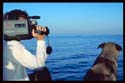 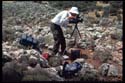 One
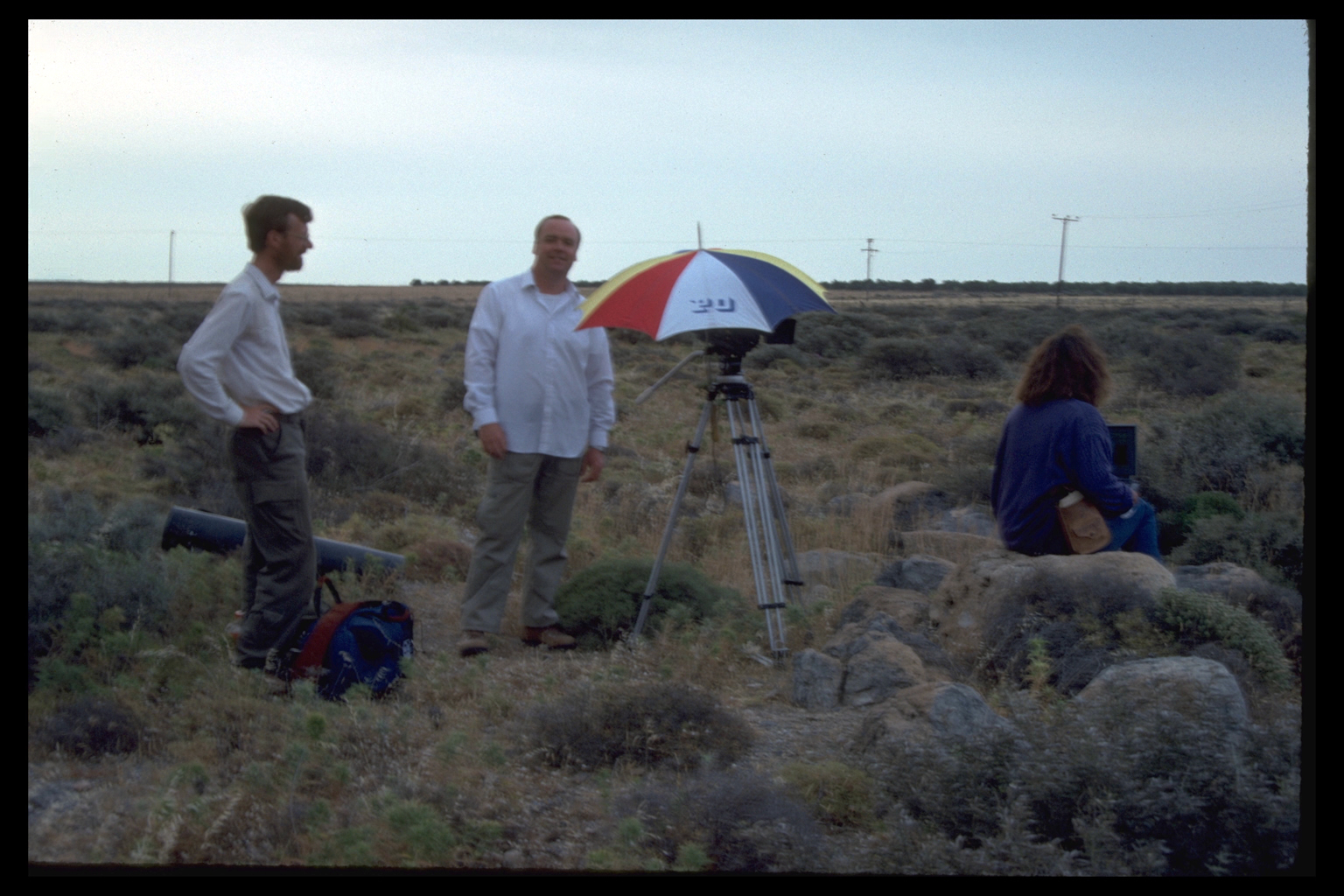
important aspect of the way the film was made was that we doubled as film-makers.
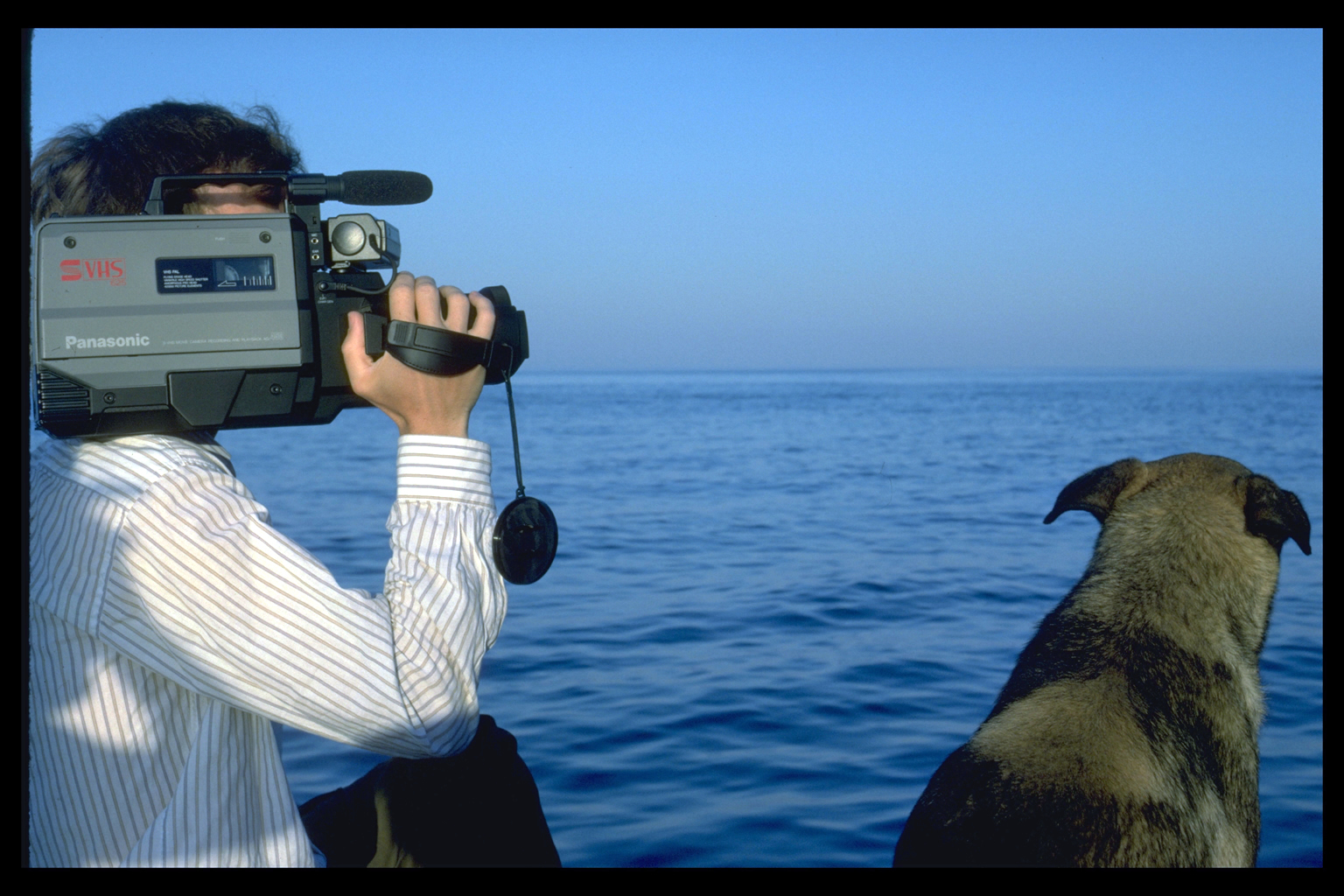
Simon Price took the first footage for the film in 1988 and 1989, on VHS
and S-VHS cameras. He and Lucia Nixon edited that footage into a finished
version in 1989. The experience was very educational, at least for us.
Neither of us had never used a video camera before, and nor had we any
experience of editing footage. But the result was something of which we
still feel quite proud: a vast improvement over your usual home video,
which went down well with academic audiences in the UK and Canada. However,
the result was as good as it was largely because of the advice and editing
help of Charles Beesley, who is the cameraman of the video unit at the
University of Oxford, Educational Technology Resources Centre (ETRC).
Because of the potential shown in this first version, we were able to
persuade ETRC to make a new version as a joint project with us: they supplied
equipment, paid salaries and provided editing time; we had only to find
fares and subsistence. One
important aspect of the way the film was made was that we doubled as film-makers.
Simon Price took the first footage for the film in 1988 and 1989, on VHS
and S-VHS cameras. He and Lucia Nixon edited that footage into a finished
version in 1989. The experience was very educational, at least for us.
Neither of us had never used a video camera before, and nor had we any
experience of editing footage. But the result was something of which we
still feel quite proud: a vast improvement over your usual home video,
which went down well with academic audiences in the UK and Canada. However,
the result was as good as it was largely because of the advice and editing
help of Charles Beesley, who is the cameraman of the video unit at the
University of Oxford, Educational Technology Resources Centre (ETRC).
Because of the potential shown in this first version, we were able to
persuade ETRC to make a new version as a joint project with us: they supplied
equipment, paid salaries and provided editing time; we had only to find
fares and subsistence.
Professional cameraman
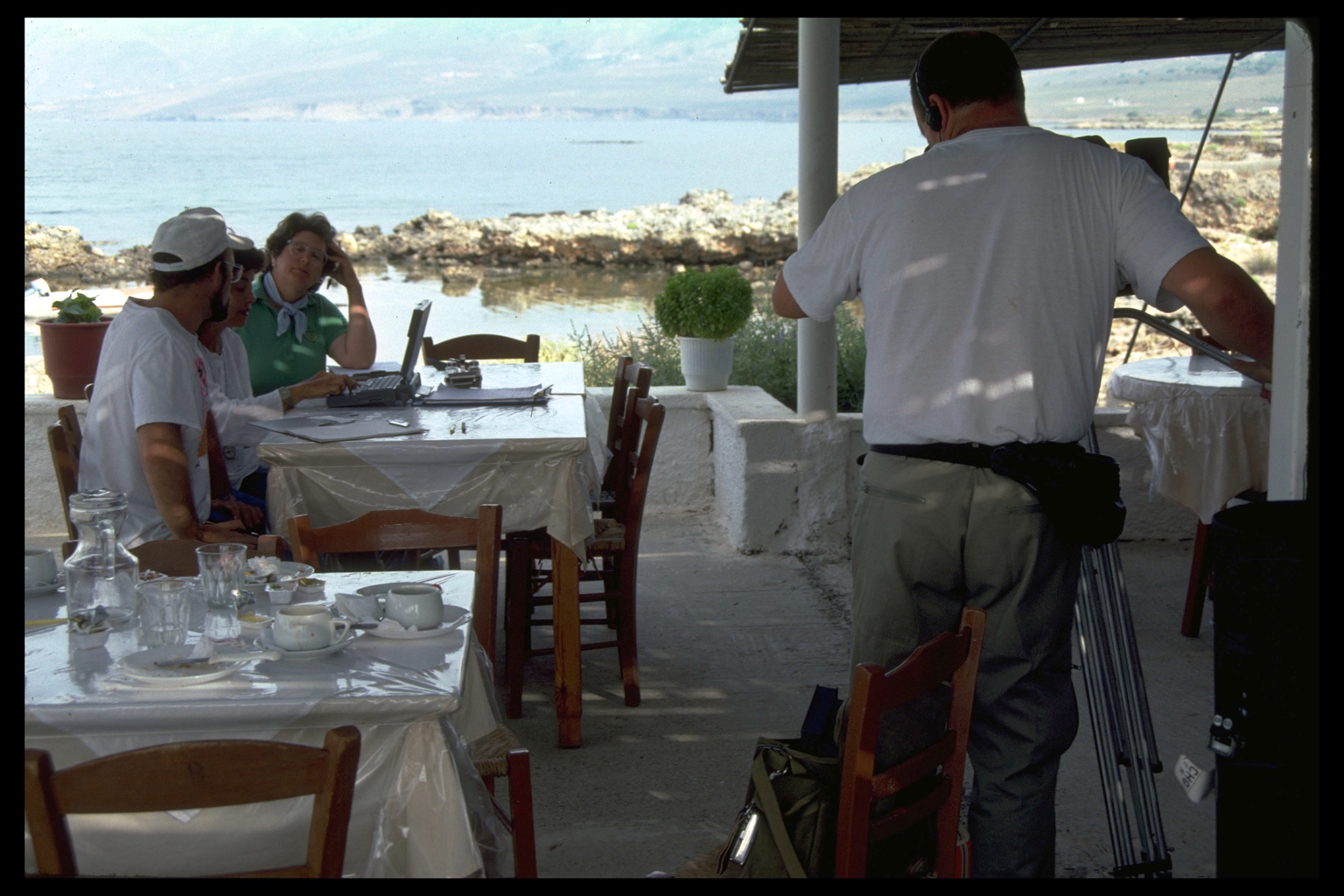
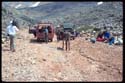 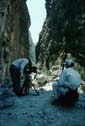 So
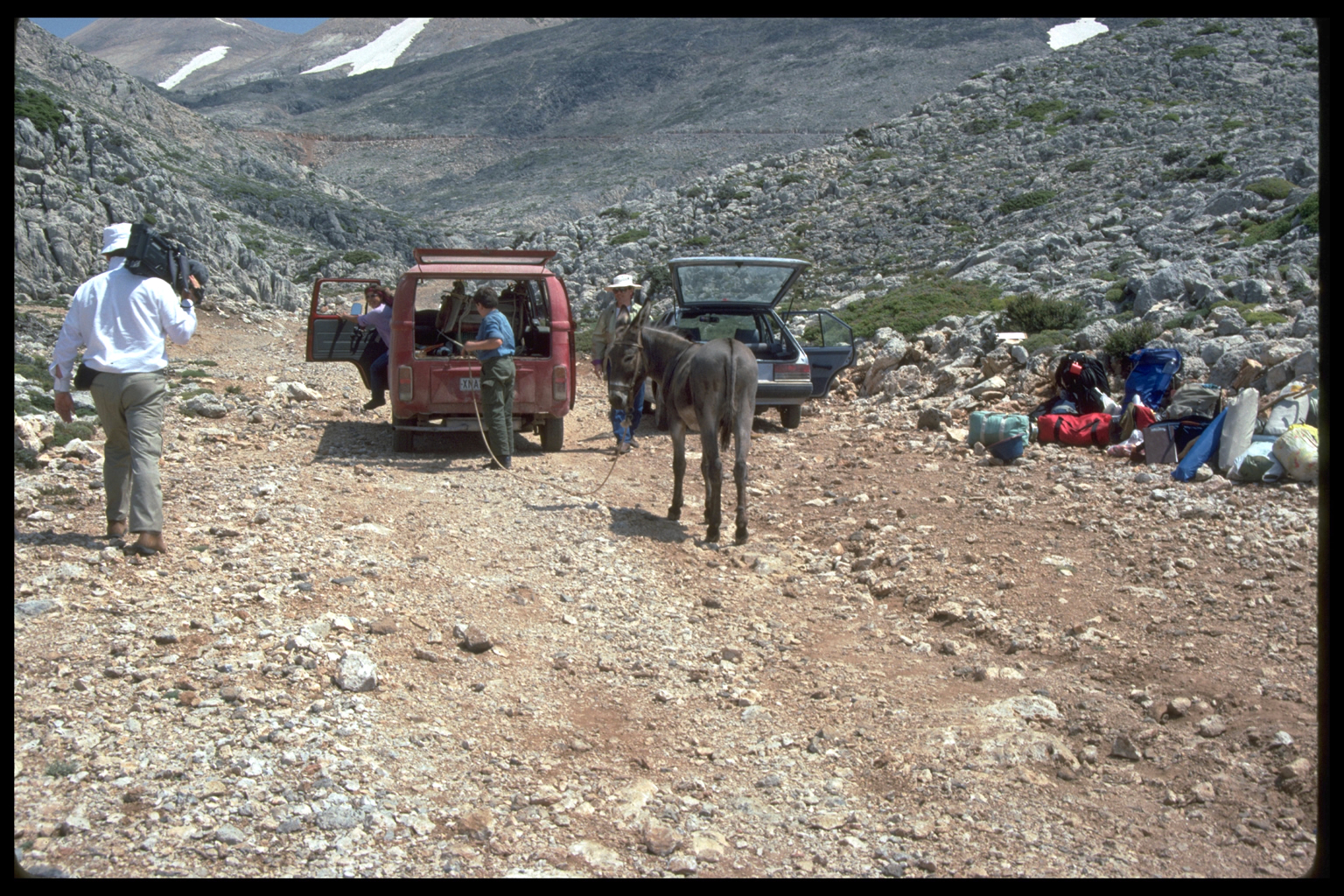
in 1992 Beesley came to Crete, with a Betacam 300 SP camera (belonging
to the university, and insured for £35,000), a top of the range camera
of the sort used by professional news crews. We took him everywhere, by
van, by boat, and on foot (including a six hour walk to the top of the
White Mountains). He took superb footage. The following autumn we edited
a rough version, which showed that we needed a bit more footage, both
for cutaways and on some topics we had not been able to cover the first
time. So we had the luxury of a second visit by Charles Beesley in 1994,
this time accompanied by an assistant, Karen Watts. The significance of
this factual detail is that most universities have similar audio-visual
units, which are a key resource that could enable the production of similar
archaeological films. So
in 1992 Beesley came to Crete, with a Betacam 300 SP camera (belonging
to the university, and insured for £35,000), a top of the range camera
of the sort used by professional news crews. We took him everywhere, by
van, by boat, and on foot (including a six hour walk to the top of the
White Mountains). He took superb footage. The following autumn we edited
a rough version, which showed that we needed a bit more footage, both
for cutaways and on some topics we had not been able to cover the first
time. So we had the luxury of a second visit by Charles Beesley in 1994,
this time accompanied by an assistant, Karen Watts. The significance of
this factual detail is that most universities have similar audio-visual
units, which are a key resource that could enable the production of similar
archaeological films.
Editorial control
Editorial control was firmly in the hands of Lucia Nixon and Simon Price.
We edited the film in Oxford on a Betacam Composite Edit Suite (alas not
a new generation digital edit suite, which allows images to be inserted
into an already edited sequence). Charles Beesley was excellent as a facilitator
and critic, but we determined form and structure.
The cost to us in editorial control was time. Not only was the filming
time-consuming (we were with Beesley almost all the three weeks that he
filmed in Crete), but the editing process is even more intensive (on a
good day an hour of editing time for each minute of final footage, and
that is after weeks of work selecting the footage). But the process is
a creative one, and one which we enjoyed.
The fact that we were able to direct the actual filming and to decide
the entire structure of the film is perhaps the solution to the tyranny
of 'broadcast quality standard'. Rather than devolving the production
of the film onto outsiders, or having to bring in a professional presenter,
we retained authorial control.
Video and local people
Like members of other survey projects (and unlike most excavation archaeologists),
we have always depended on local knowledge, both practically and intellectually.
Conversely, we have always told people what we were doing. We always informed
people where we were going in the morning, and explained to anyone working
in the countryside that we had the necessary permits, that we were collecting
only surface finds, and that those finds would end up in the nearest museum
(in Khania on the north coast of Crete). We also did an interview
for Ta Sphakia, a Greek language paper produced in Athens for Sphakiotes
the world over.
In addition, we arranged through the Greek Embassy in London for the
video to be shown on Greek national television (ERT2). The video was subtitled
in Greek, thanks to ERT2, and was shown twice, on 1 August and 18 November
1996.
The issues of learning from and reporting to informants are discussed
more fully by Lucia Nixon in a separate article. This article also comments
on the reviews of the video.
Reviews
Bennet, John 1996. Bryn Mawr Classical Review 7: 327-333;
Hamilakis, Yannis 1997. Visual Anthropology 9: 193-194;
Mee, Chris 1999. Antiquity 73: 225.
Article (with brief discussion of reviews): Nixon, Lucia 2001. Seeing
Voices and Changing Relationships: Film, Archaeological Reporting, and
the Landscape of People in Sphakia, American Journal of Archaeology 105.
Buying the video
Copies of the film may be bought in two formats, either as a video or as a DVD. A (minimal) charge of £10 will be made to cover costs. To make a purchase, please go to the Media Production Unit's
online shop.
Lucia Nixon and Simon Price
|