|
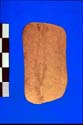
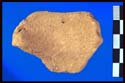
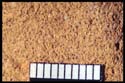
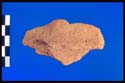
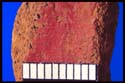
16. Sand with fine calcareous
|
A yellow to pinkish tan, medium fabric with well-sorted medium
to fine, multi-coloured sand temper. Inclusions are an even mix
of quartz, small calcareous, occasional red ferrous, fine silverblue
siltstone and chert. The quartz grits often fall out leaving a fine
spongy-looking surface.
|
Amphorae.
|
Roman to Late Roman. But there is a very similar fabric from Skaloti
Profitis Ilias (8.72) which is a scored ware and clearly Early Minoan
in date.
|
Very similar to some amphora fabrics from Cilicia.
The Sphakia examples may be imports from there.
|
|
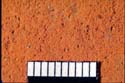
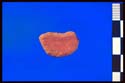
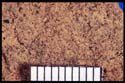
17. Sand family with black glassy mineral
|
A medium-coarse red to orange/brown fabric of mixed sand. Inclusions
are generally sub-rounded (sometimes sub-angular to angular) and
are dominated by black glassy minerals (e.g. obsidian) and often
tourmaline. Minerals are fairly large (ca. 2-5 mm); other common
inclusions are silver mica, and milky and glassy quartz. The paste
is well-refined and much finer than the minerals. Breaks are grainy
and gritty, while surfaces tend to be very hard and slightly gritty/sandy.
Macroscopic inclusion density varies from 20-40%.
|
Cooking pots (including Pompeian Red Ware), amphoras, and, less
frequently, small bowls.
|
Primarily a Roman fabric; earliest example is Hellenistic (ca.
200 BC). Most common in Late Hellenistic/Early Roman (1st c. BC/AD),
although an occasional Roman-Late Roman example appears.
|
Most of this comes from Italy (Campania), based on volcanic inclusions.
Found in Sphakia in Regions 1 (2), 2 (2), 3 (2), 4 (33), 5 (5) and
6 (5).
|